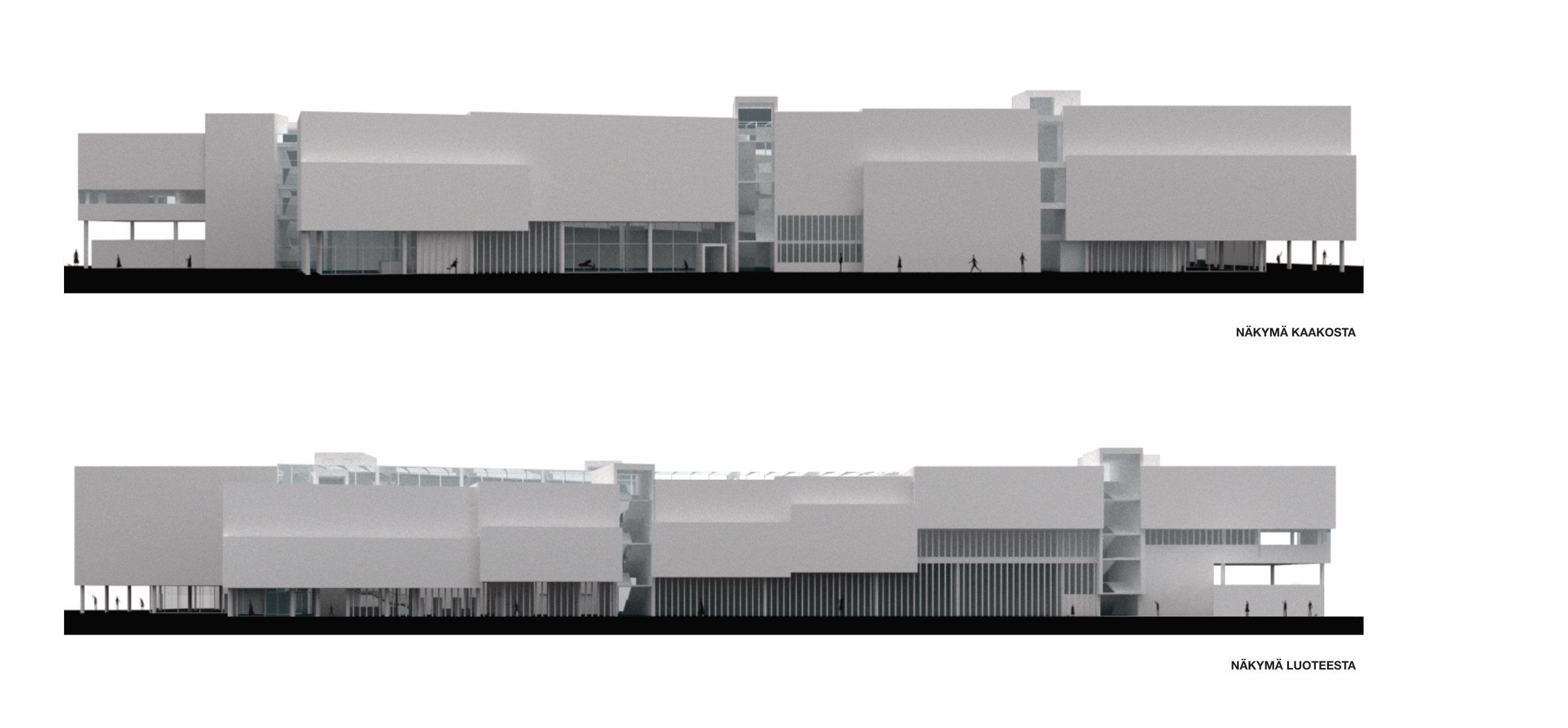
The international two‑stage open competition sought a design for a globally unique museum of architecture and design in Helsinki’s South Harbour to redefine Helsinki as a destination for architecture, design, arts and culture.

PUBLIC AREAS
Ground floor
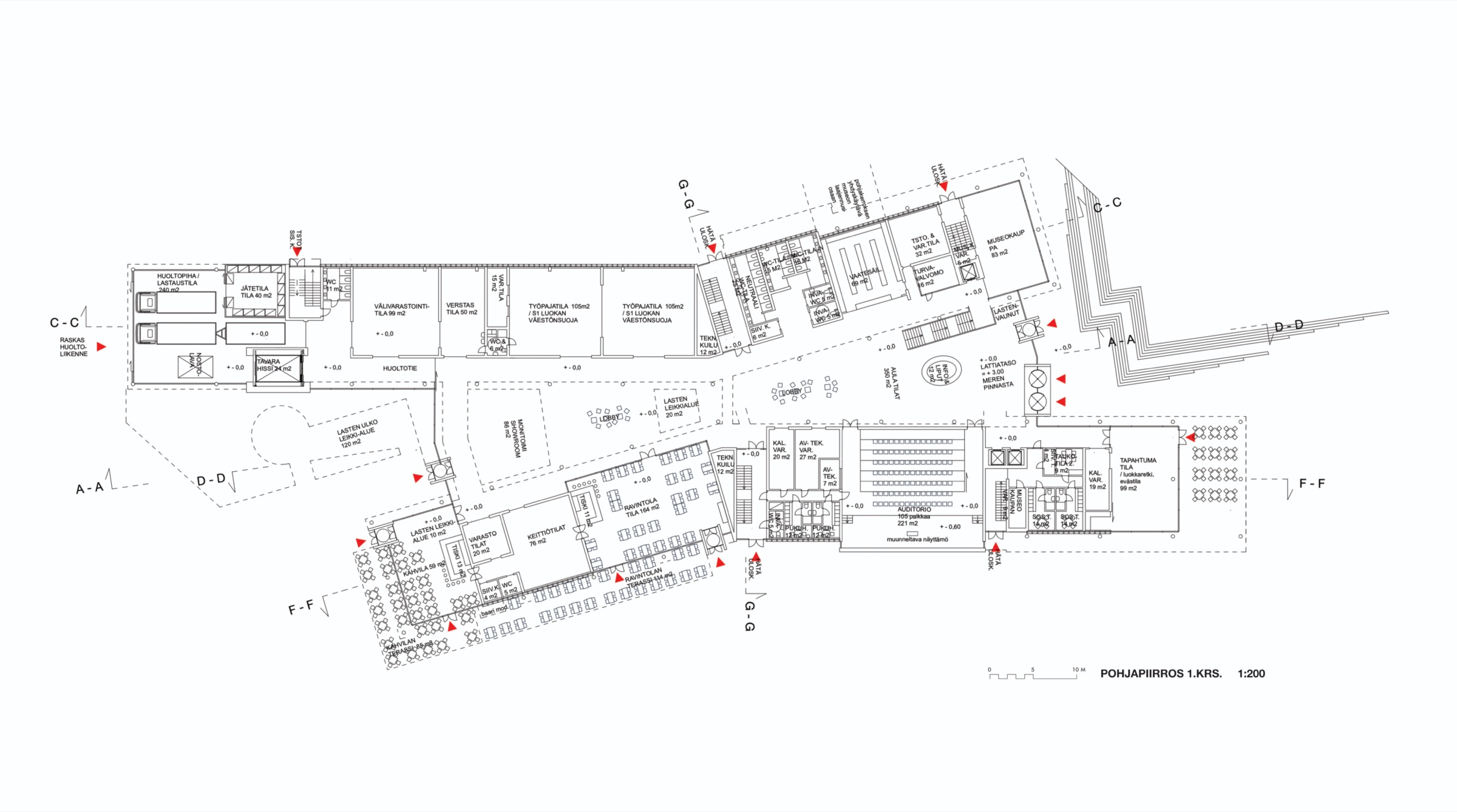
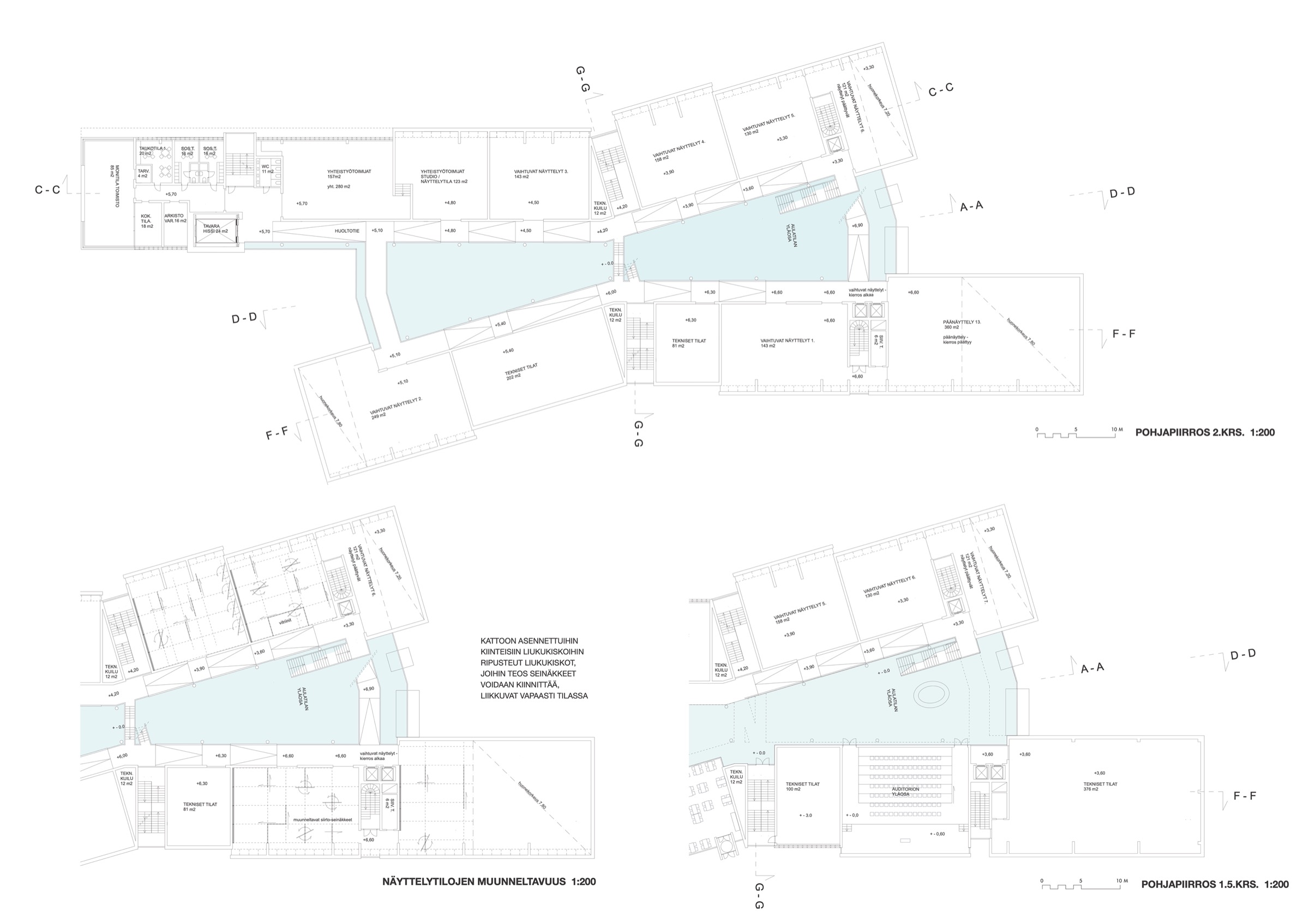
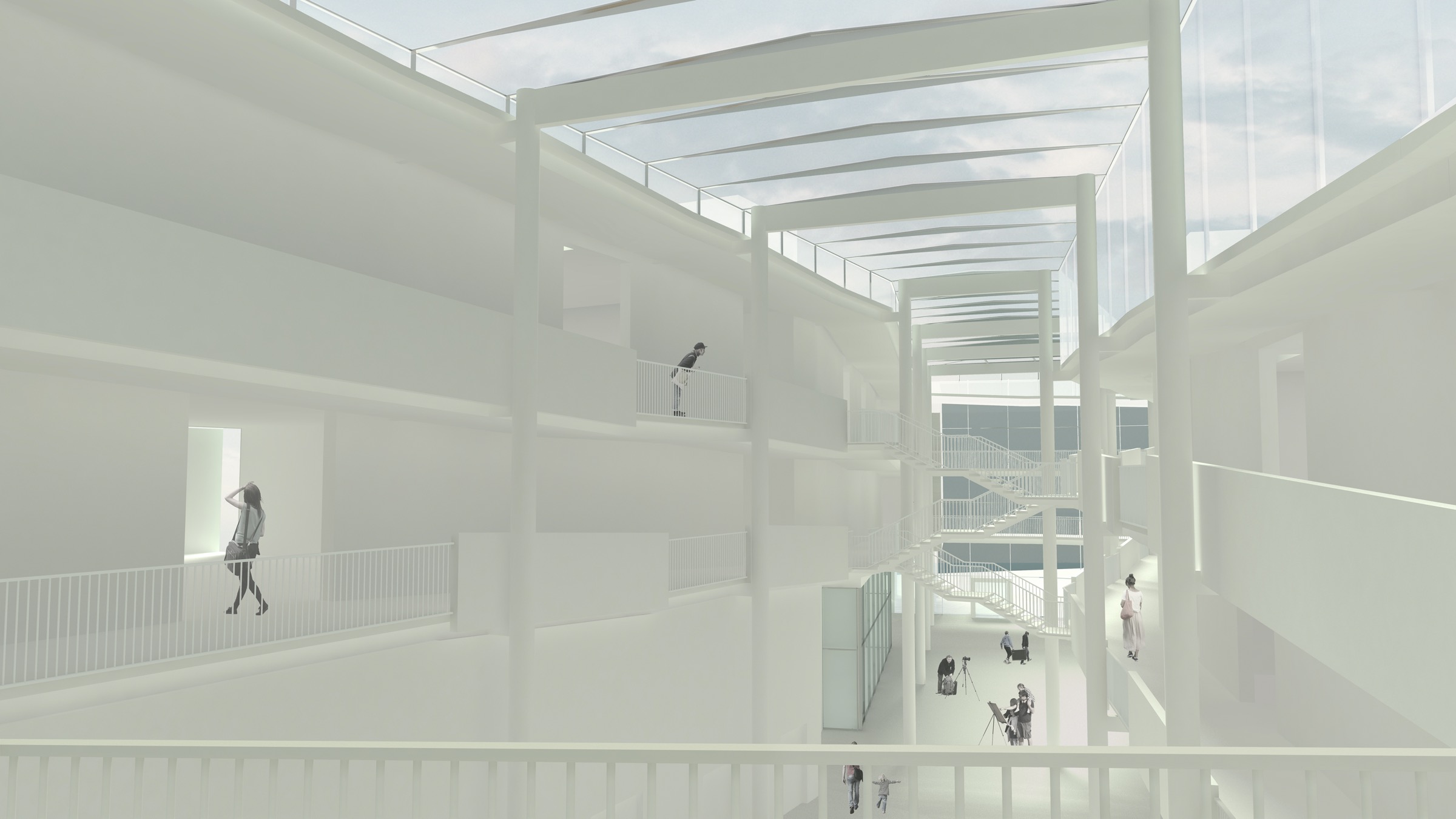
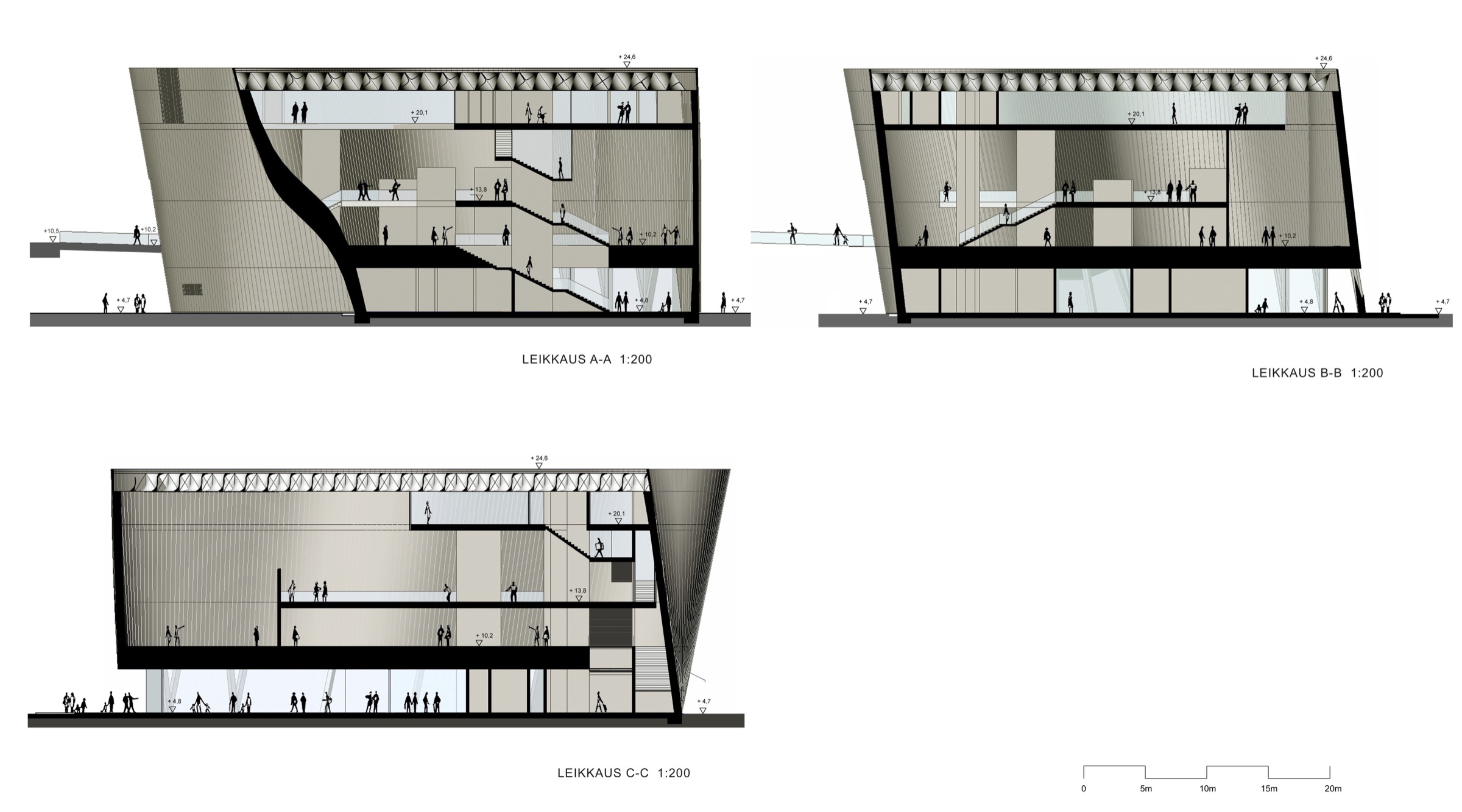
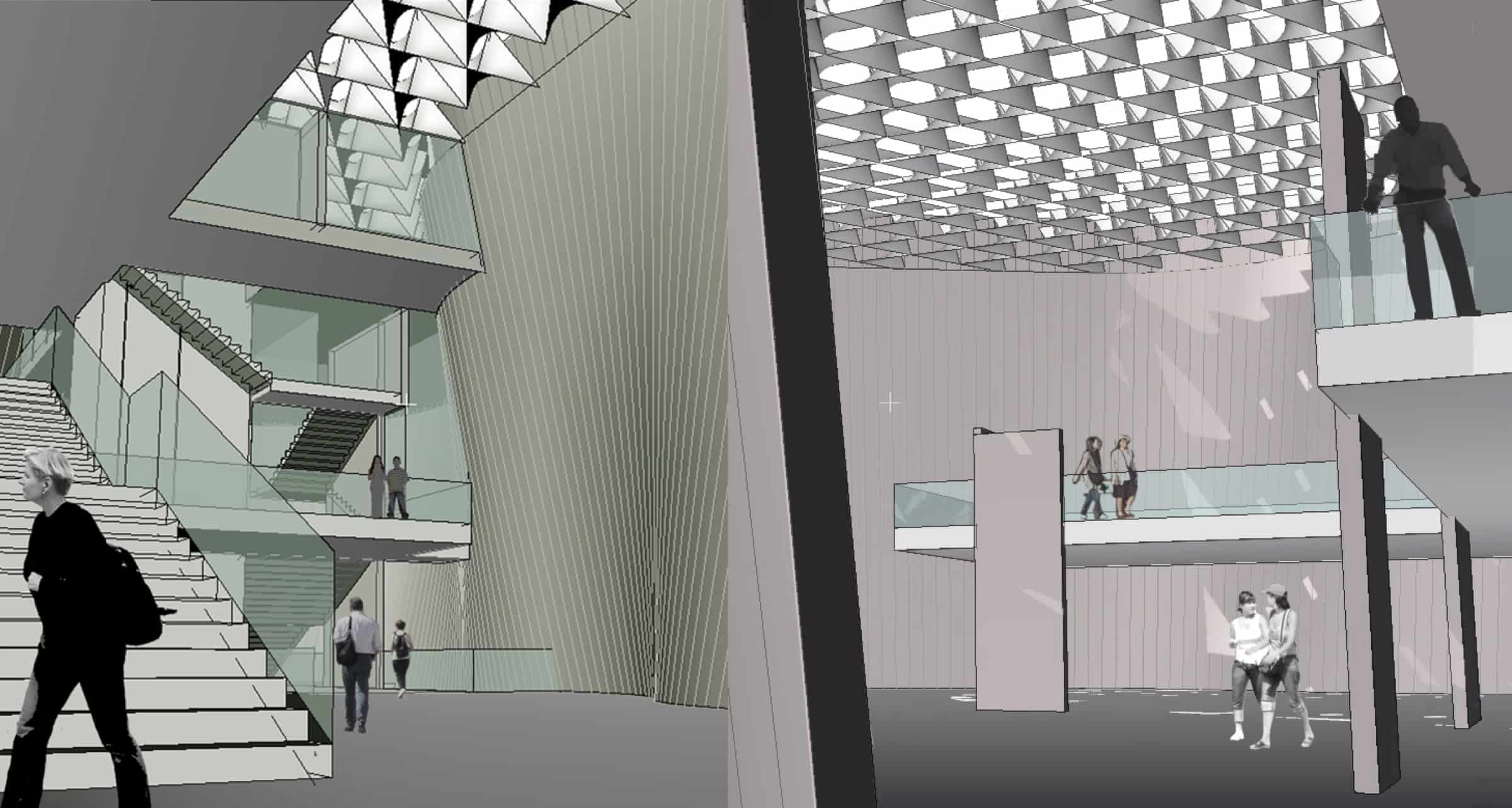
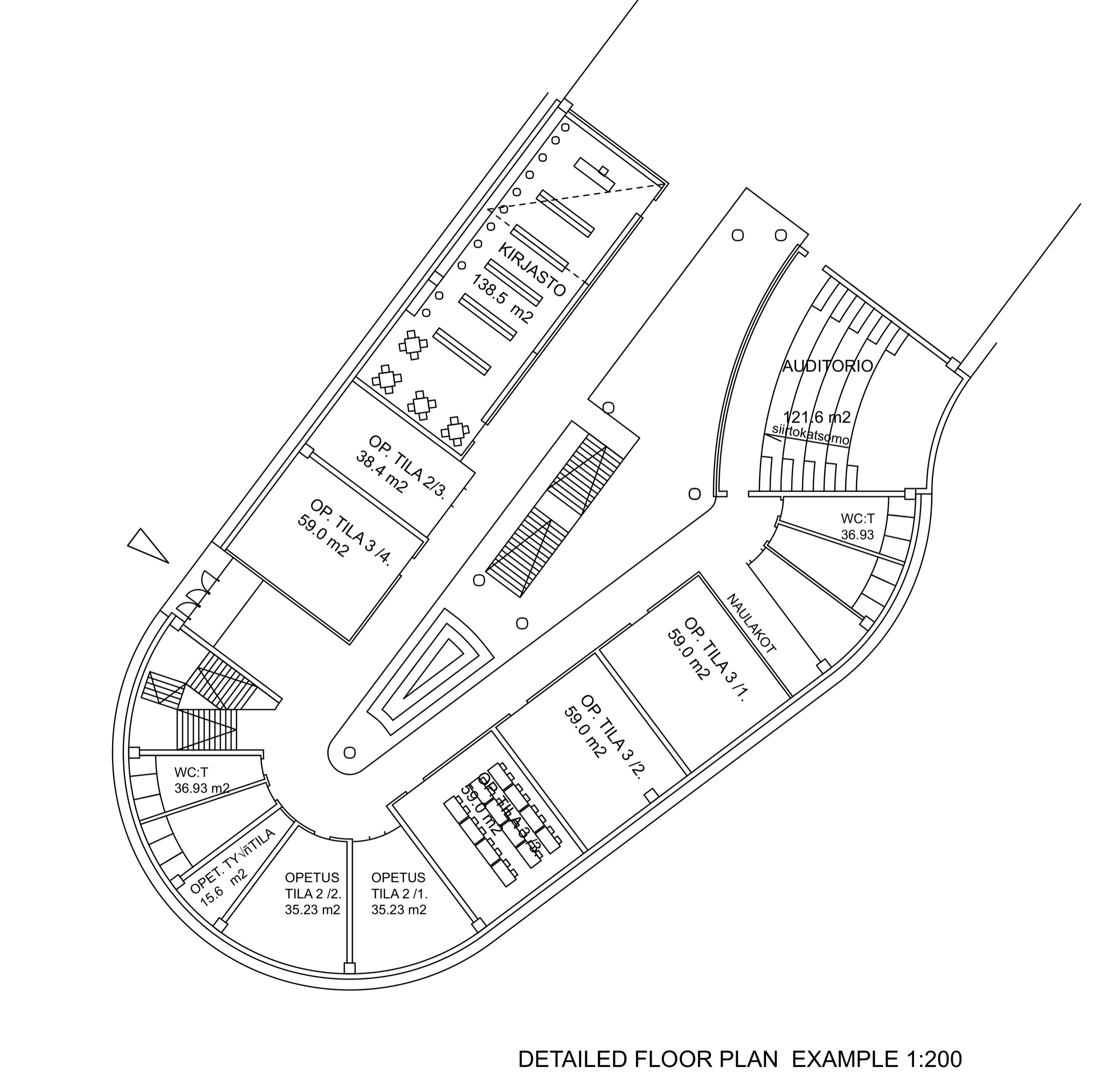
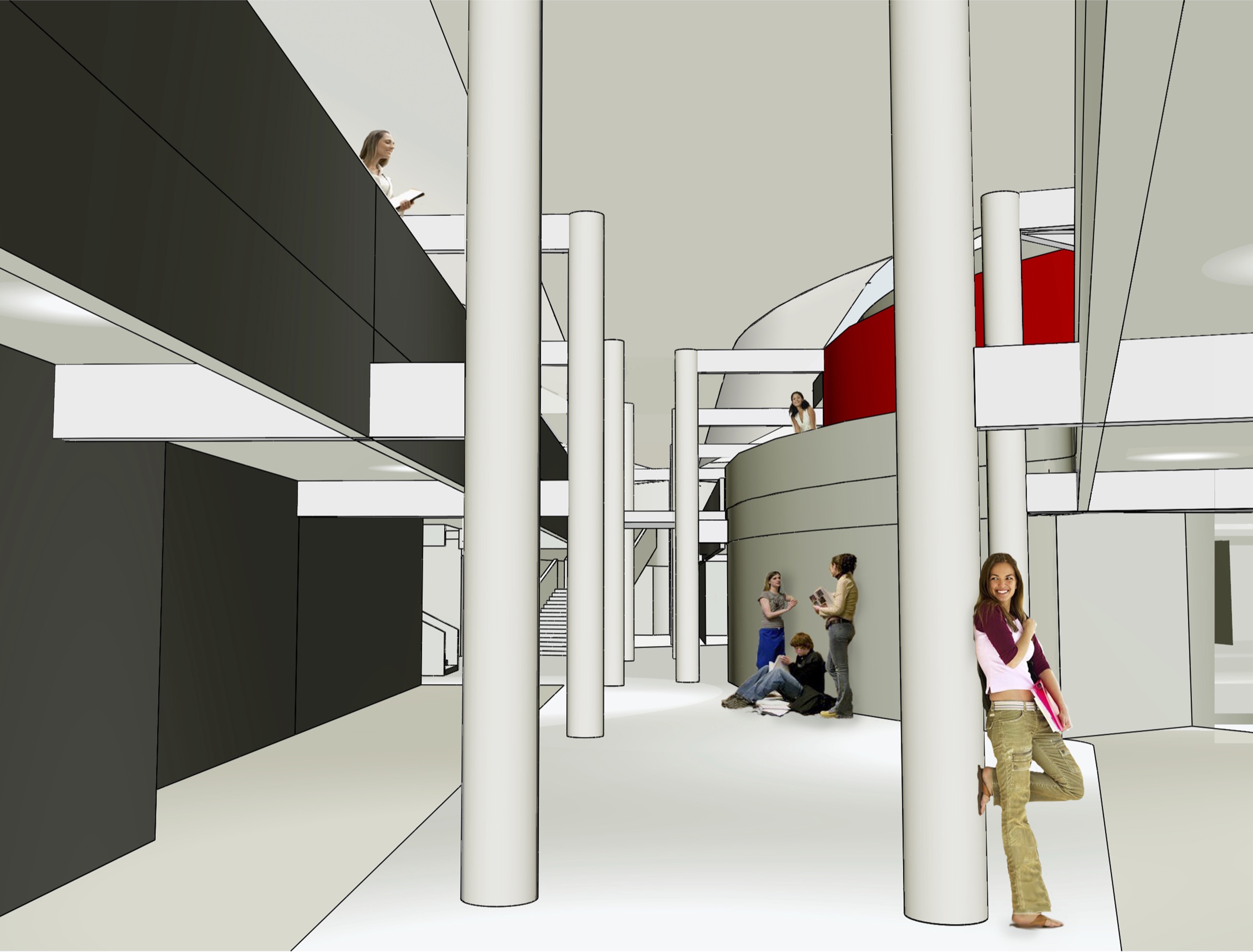
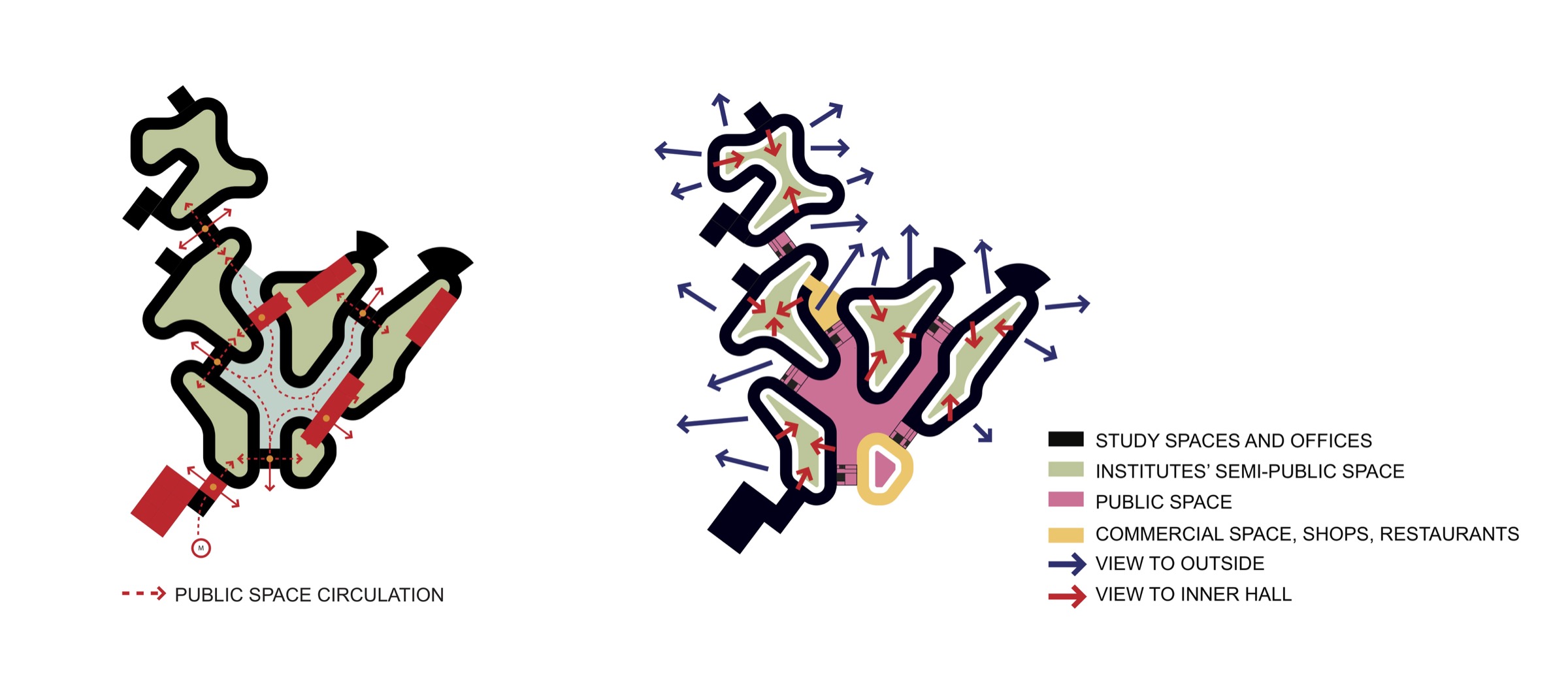
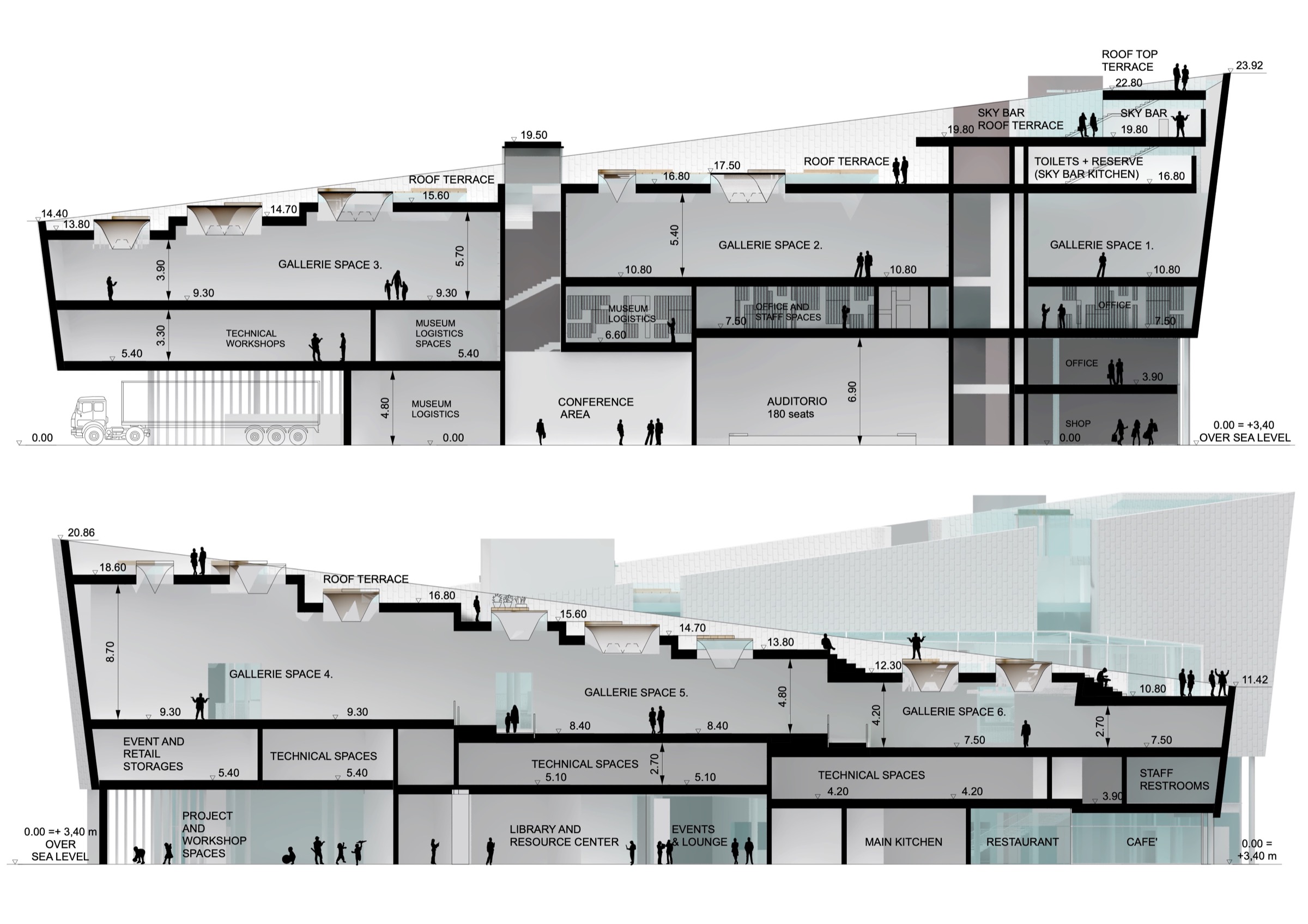
The museum’s ground floor contains supporting services: cloakroom, toilets, café and restaurant, museum shop, lobby, library and a congress centre with auditoriums and workshop spaces; from the main foyer, visitors can take lifts to the 3rd‑floor exhibition galleries or to the 5th‑floor sky bar, restaurant and rooftop terrace offering panoramic seaside views and versatile event spaces.

Rooftop & events
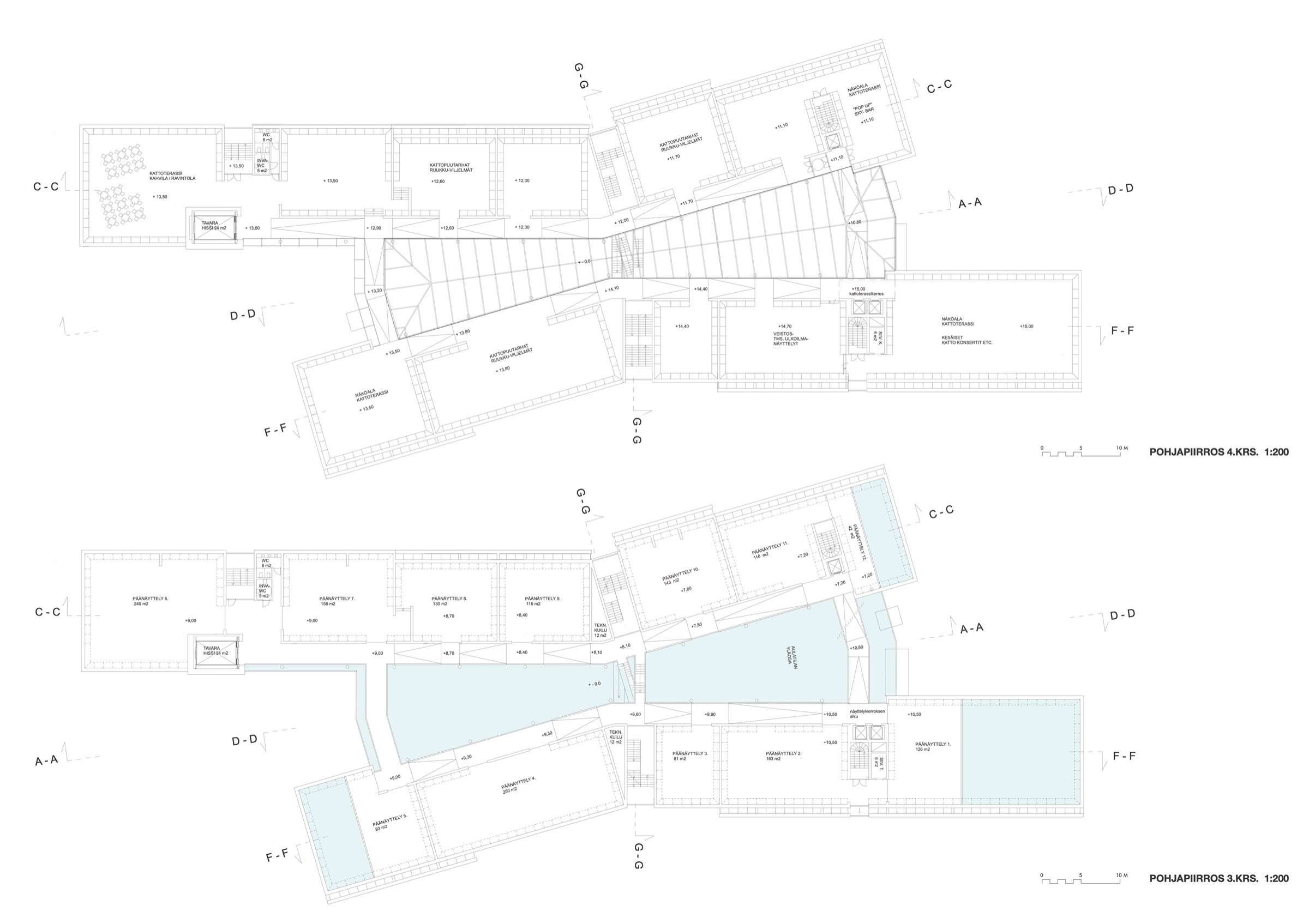
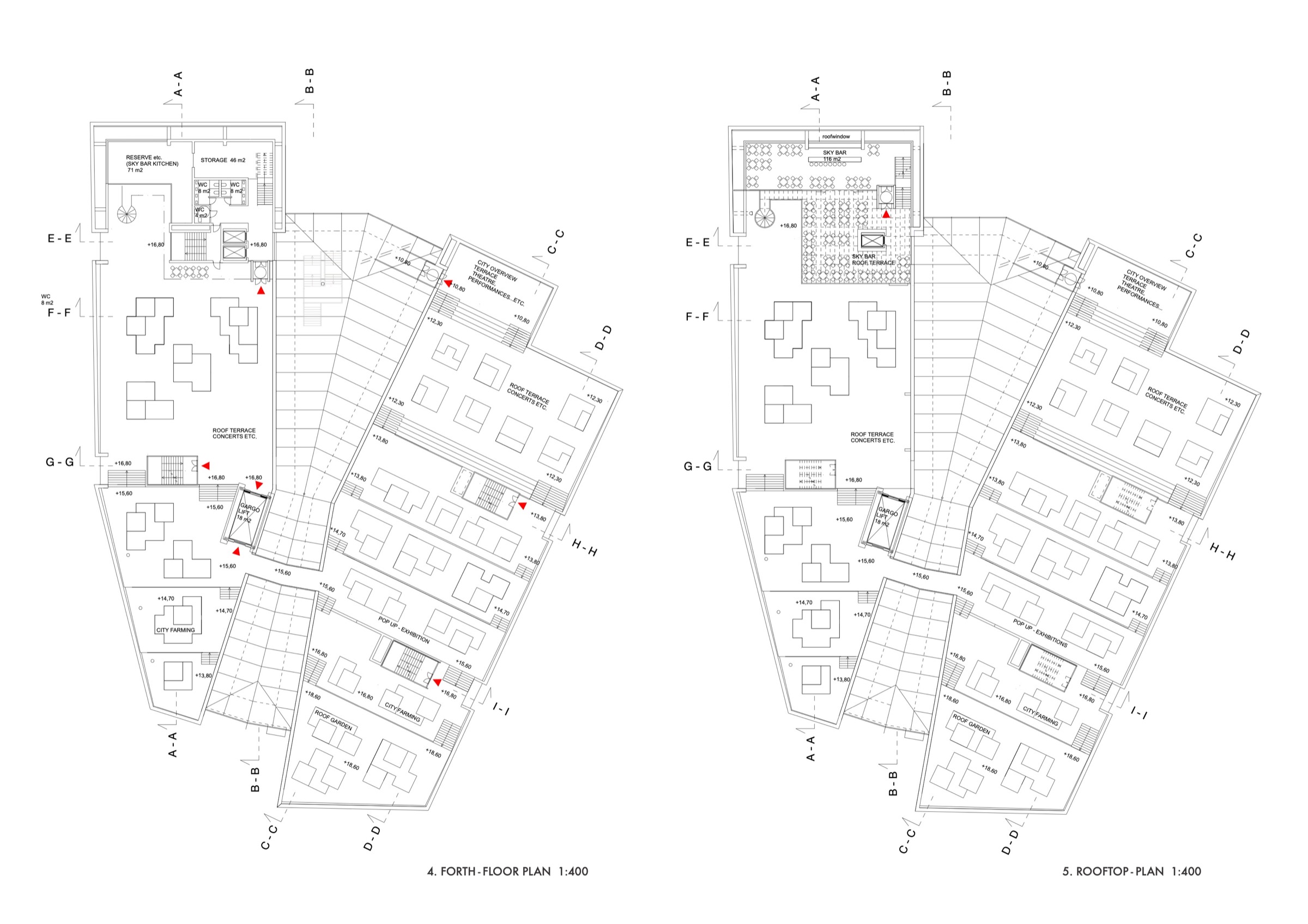
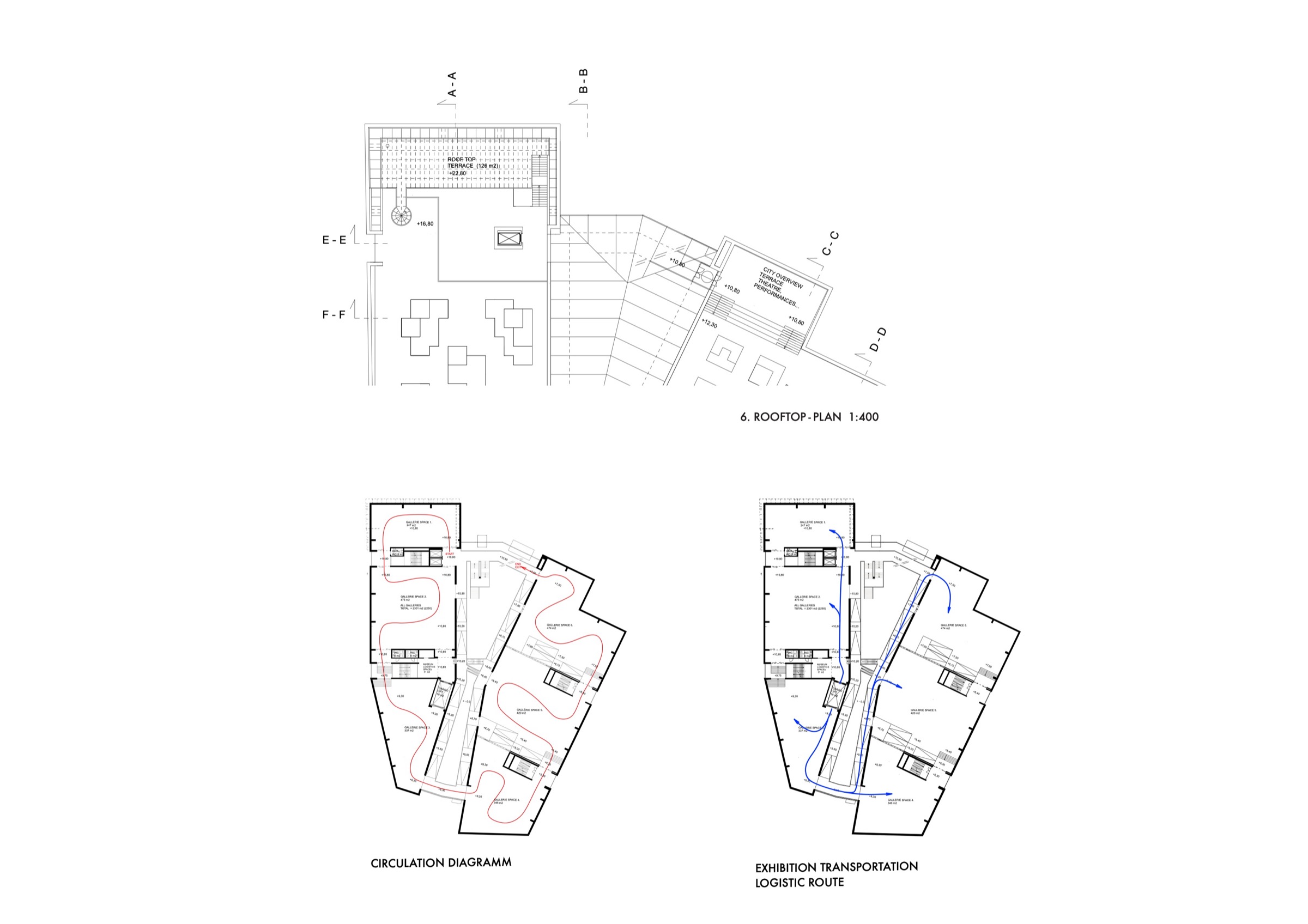
The rooftop terrace, accessed from the 5th-floor sky bar and restaurant, offers some of Helsinki’s best seaside views and food and drink facilities; it is designed as a high‑profile visitor space capable of hosting a wide range of events at varying scales and configurations, from classical concerts to techno parties.

Exhibition circulation
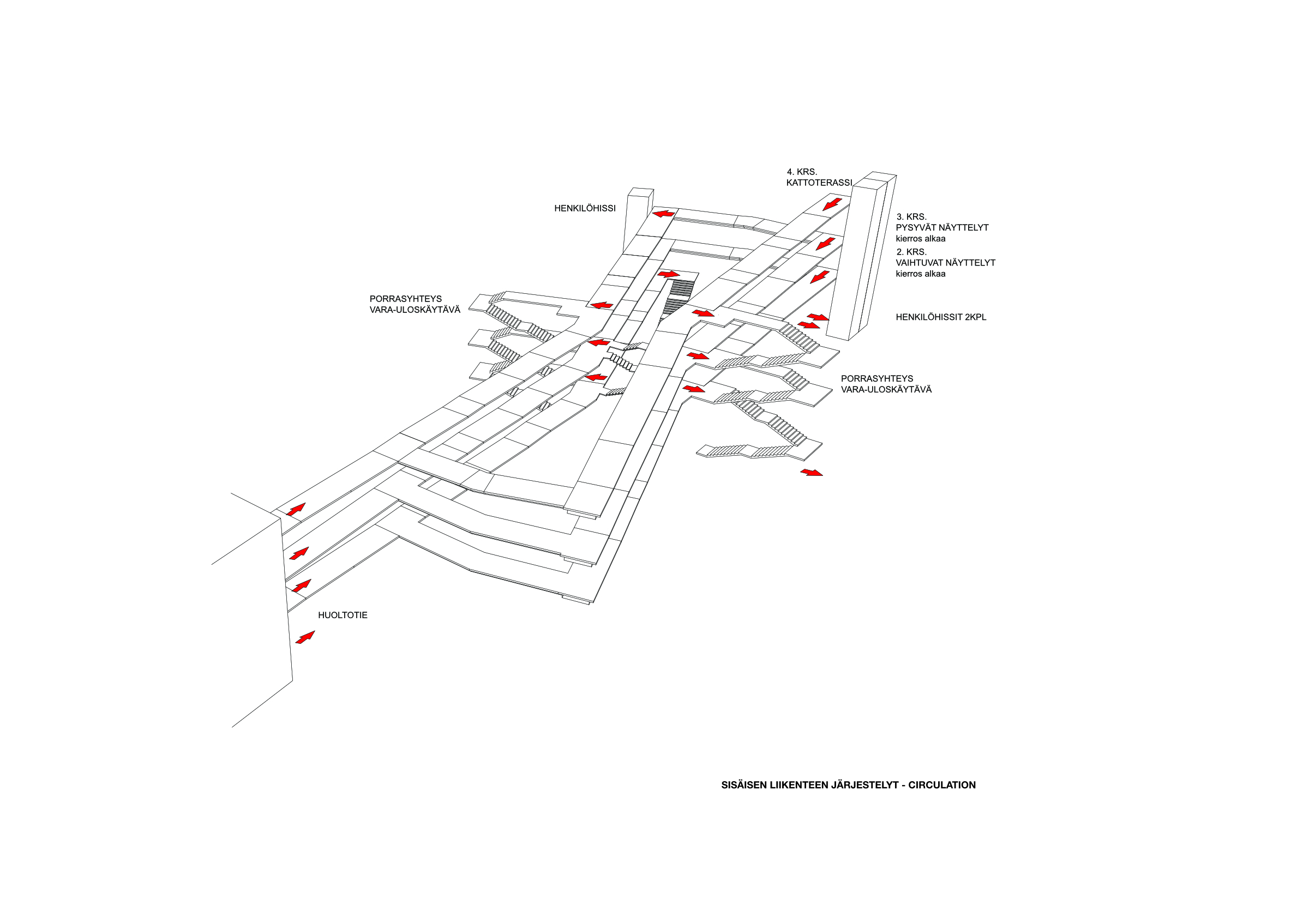
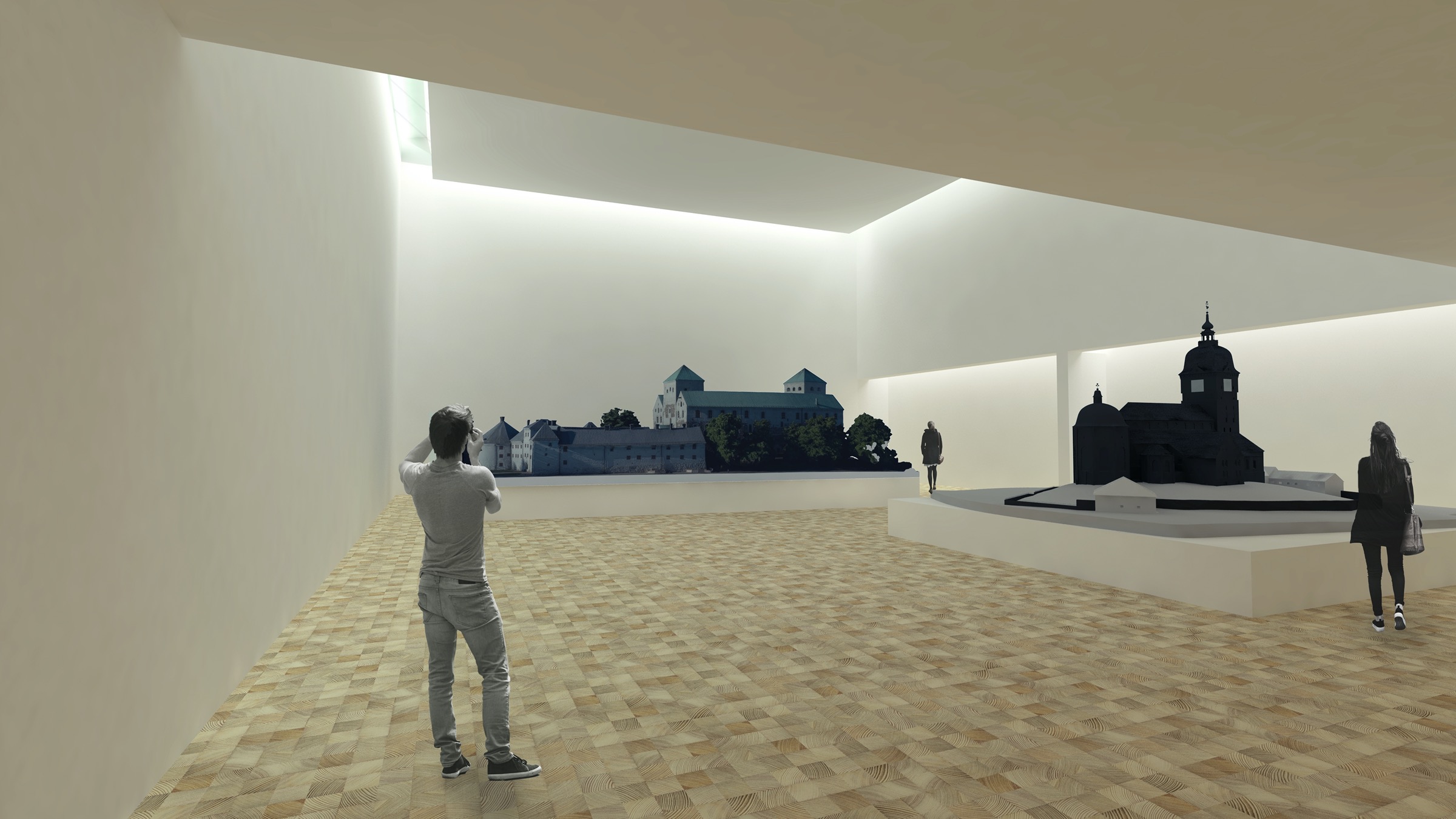
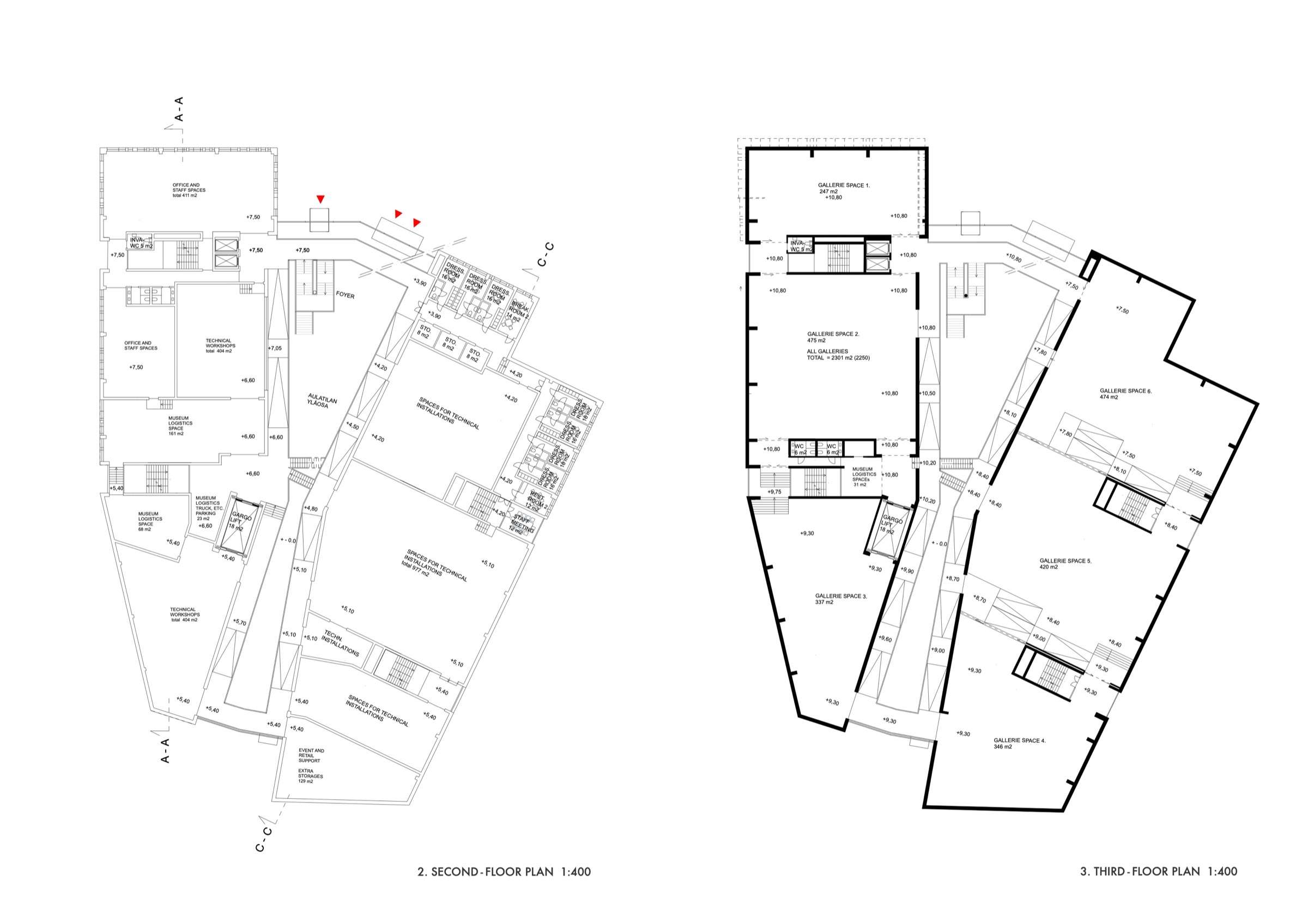
The exhibition begins on the 3rd floor and follows a user‑friendly five‑gallery loop that gently slopes down along the exterior wall to the 2nd floor; visitors follow the outside wall through a complete loop that descends gradually to the 2nd‑floor lift/stairway. A 260 cm‑wide ramp with a 5% gradient provides an accessible full circuit between the 3rd and 2nd floors for visitors with reduced mobility, and lifts connect to the ground floor. Timeline displays of Finnish design and architecture are mounted on the ramp walls, in the foyer and on screens or 2D panels.

INTERNAL AREAS — Museum management
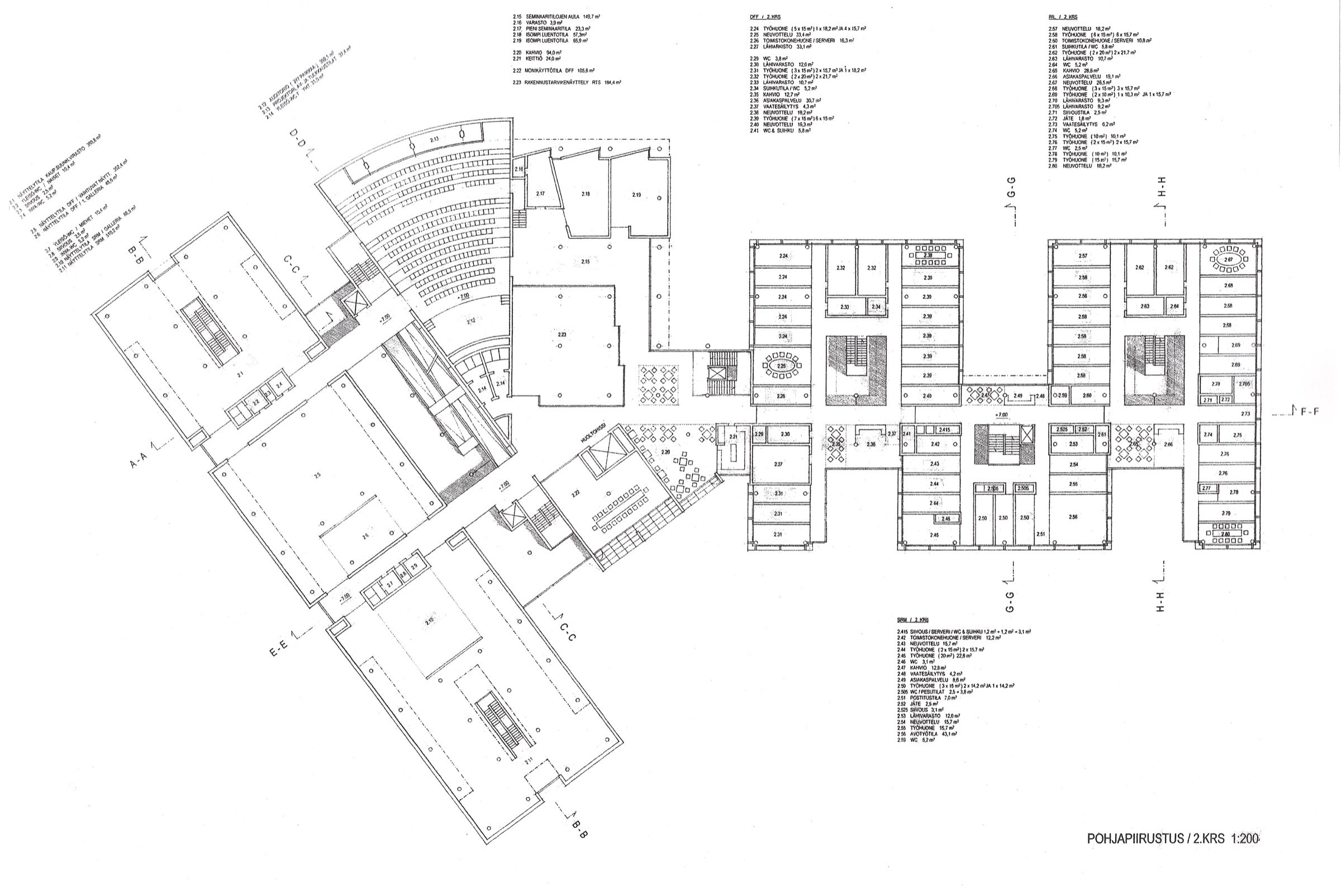
Offices, staff spaces and restrooms are mainly located on the 1.5th and 2nd floors, together with technical workshops and museum logistics; the main kitchen is on the 1st floor.

Technical rooms are on the 2nd floor, and four separate compartmented emergency‑exit stairways also serve internal circulation.

CONSTRUCTION, MATERIALS AND SUSTAINABILITY
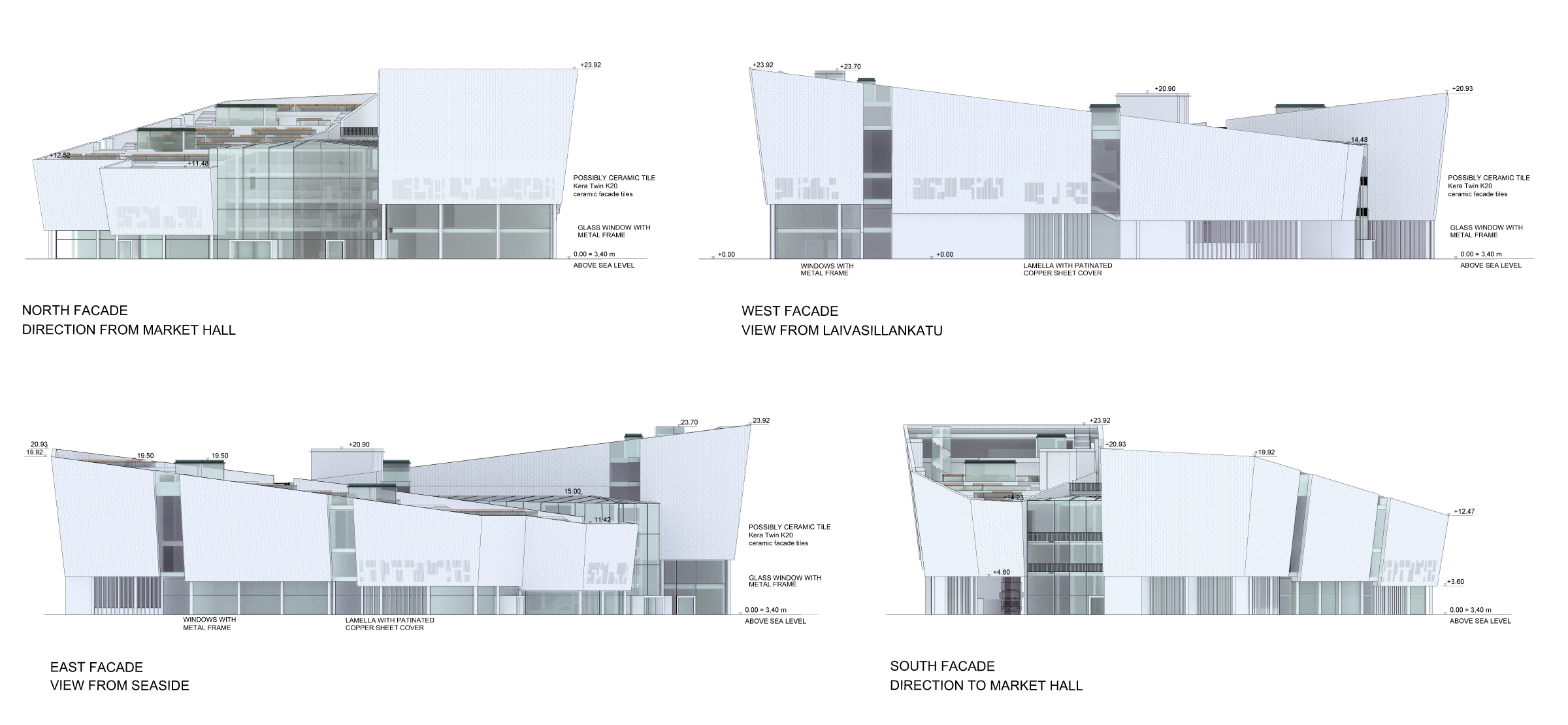
The hybrid building uses sustainable materials such as CO2‑reduced concrete, CLT timber elements and metal windows. Roof gardens can support local ecological planting and help slow rainwater runoff.

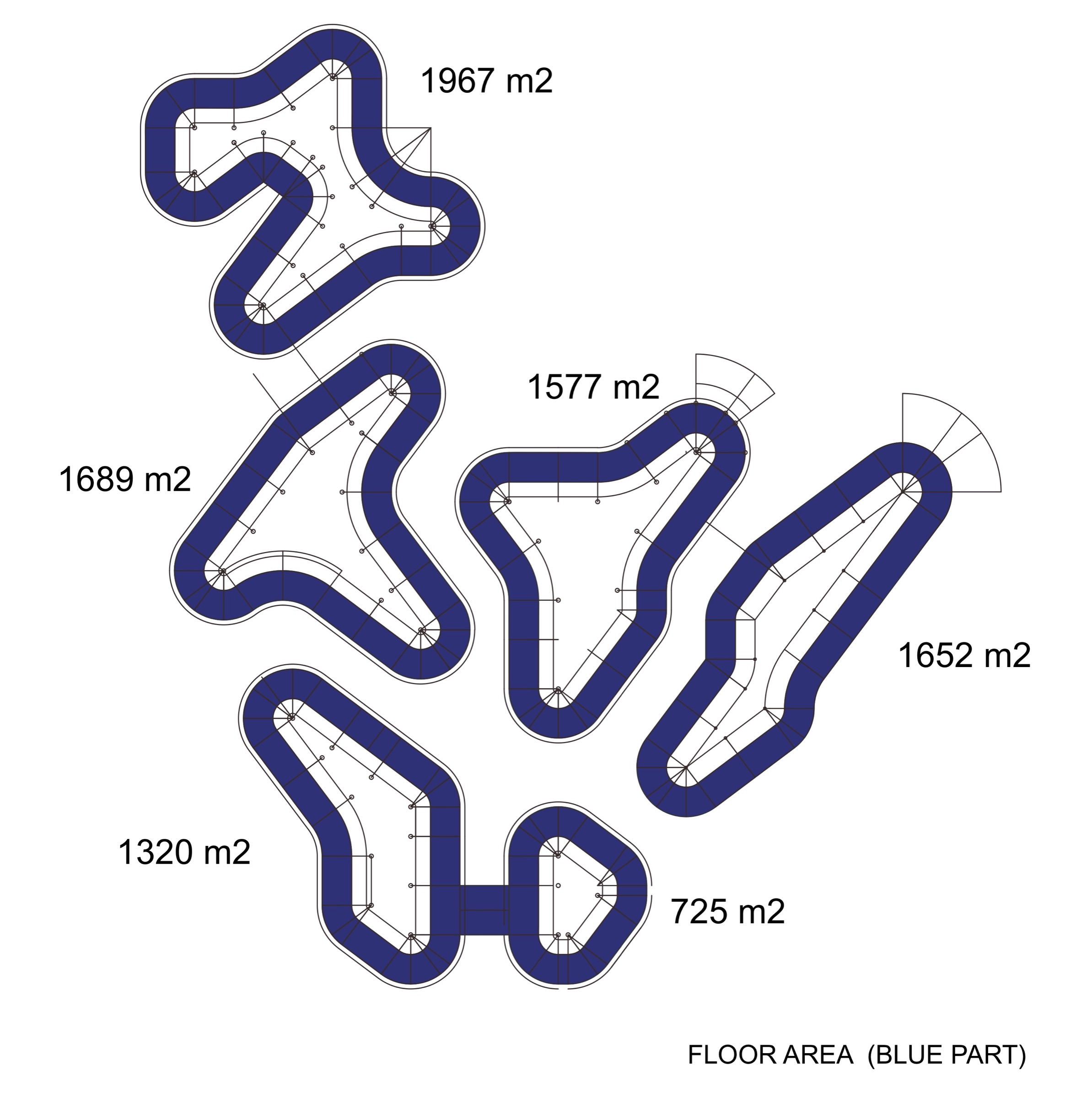
The total gross floor area (GFA) of the building is 11,701 km2.

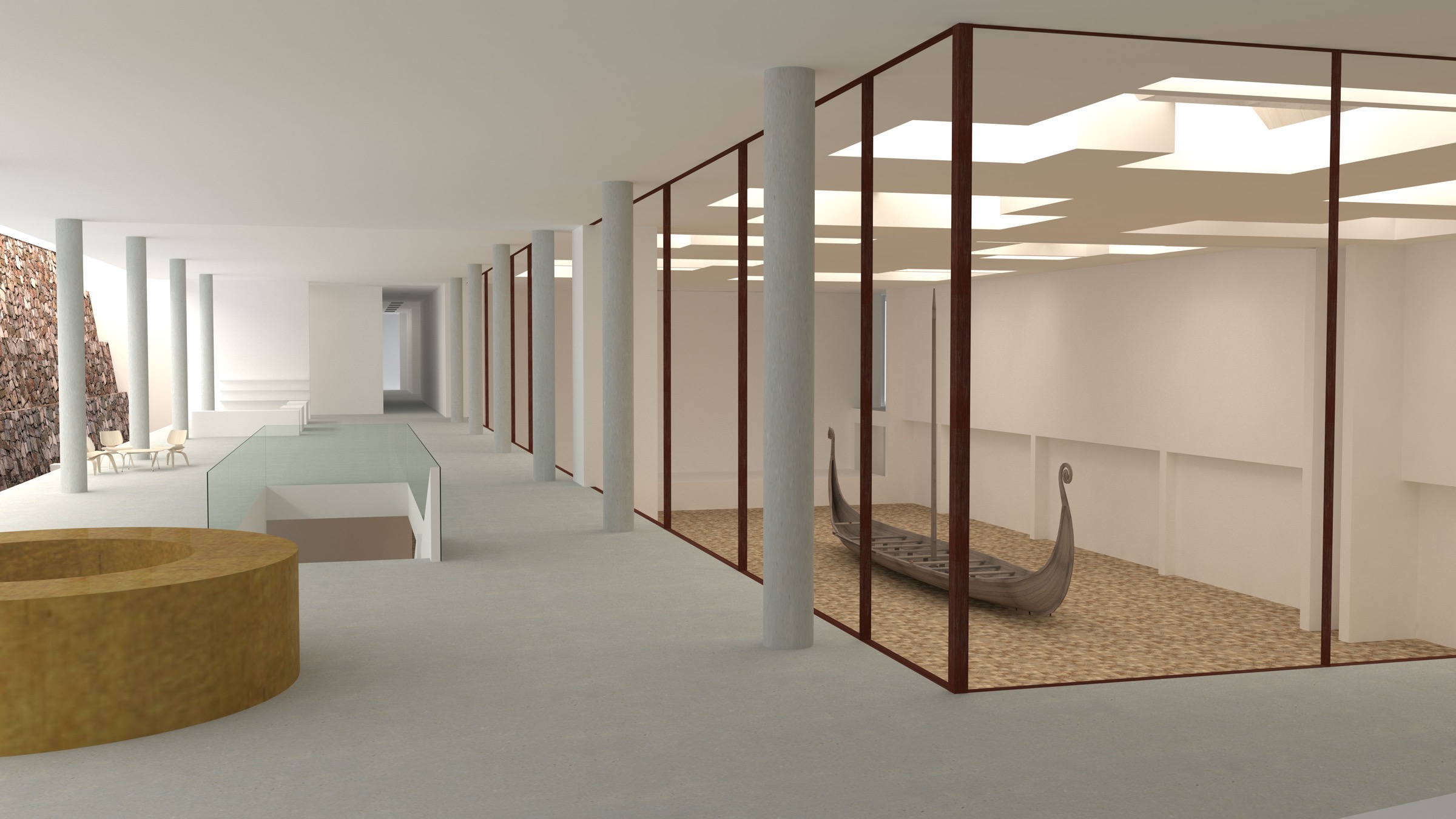
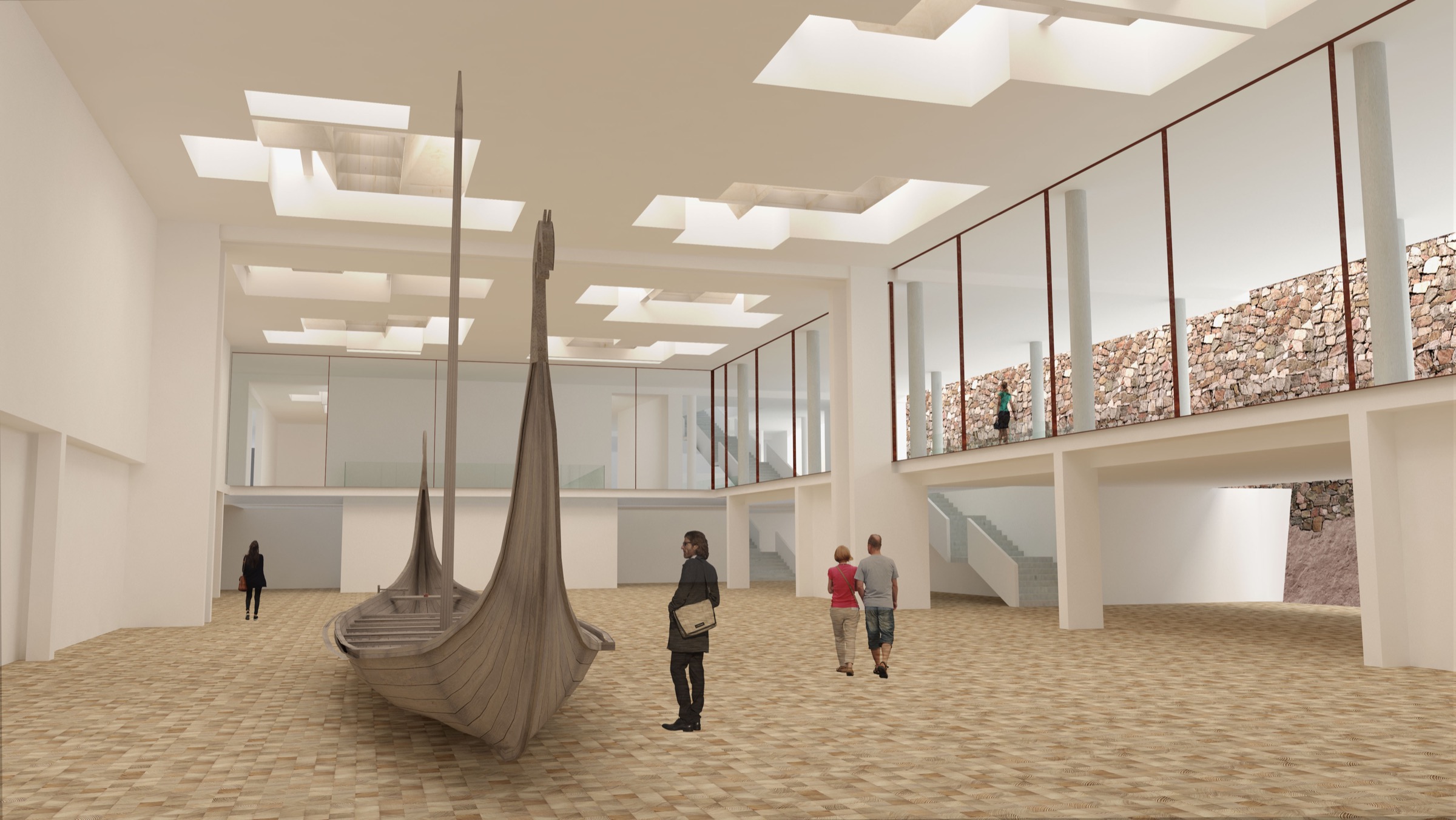
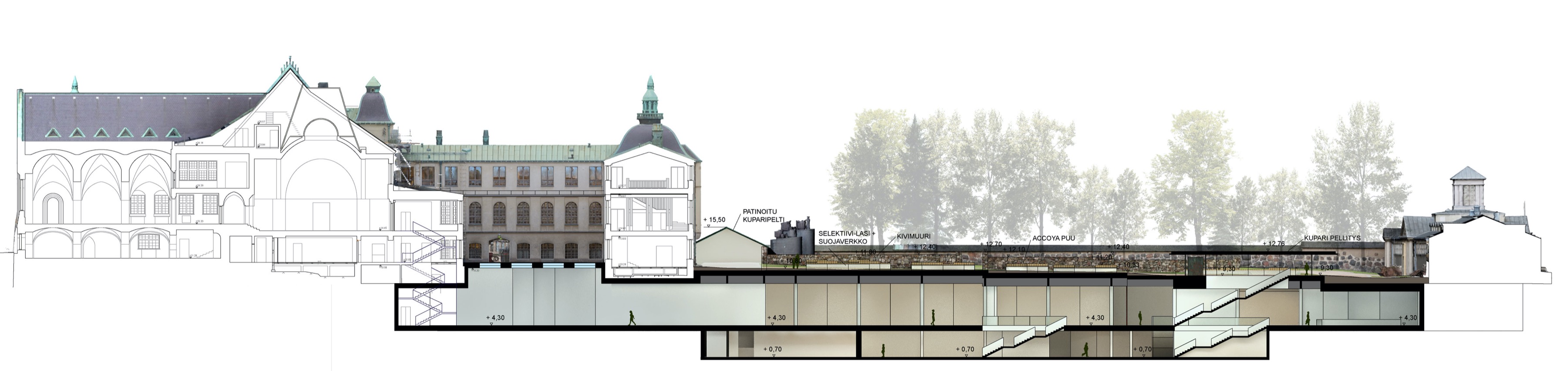
The aim of the competition was to find an internationally interesting and architecturally exceptional Museum of History and the Future that supports local development. The competition period was 4 September 2023–16 January 2024. The site of the future museum is unique in terms of its cultural history and cityscape near Forum Marinum, Turku Castle, River Aura, the Baltic Sea. Developing new Linnanniemi area offer a rewarding and at the same time demanding framework for a new building as part of a national cultural landscape.
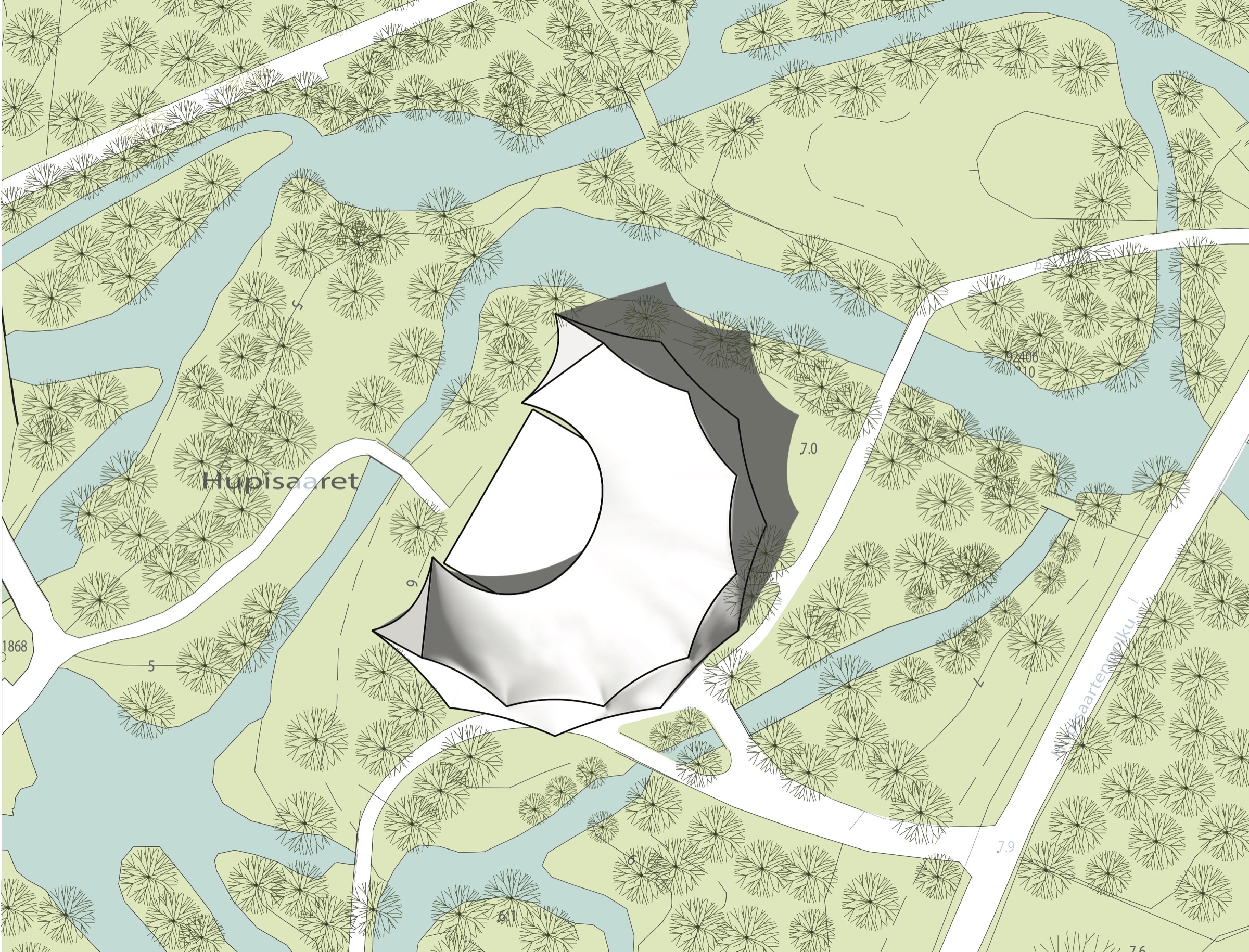
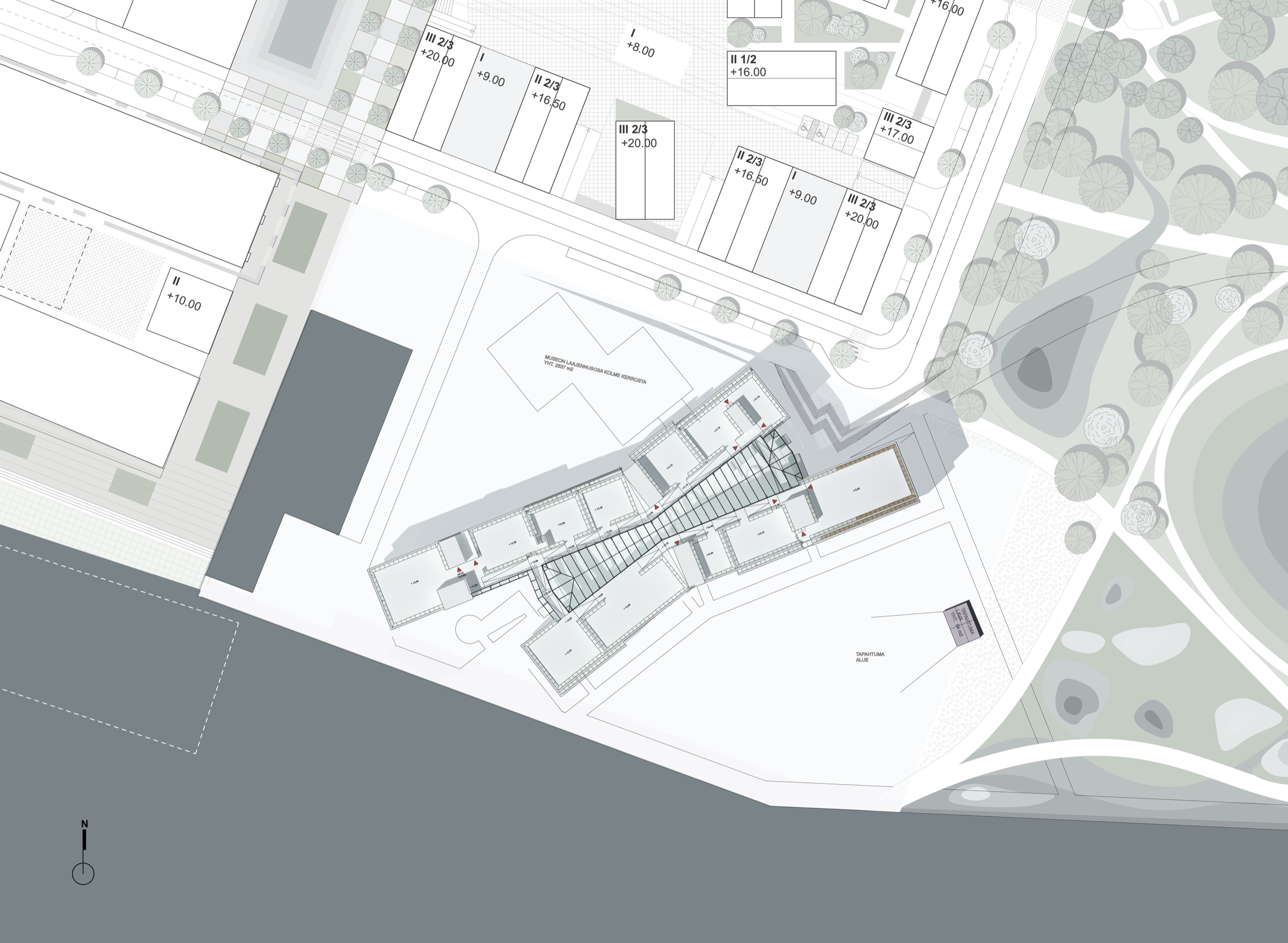
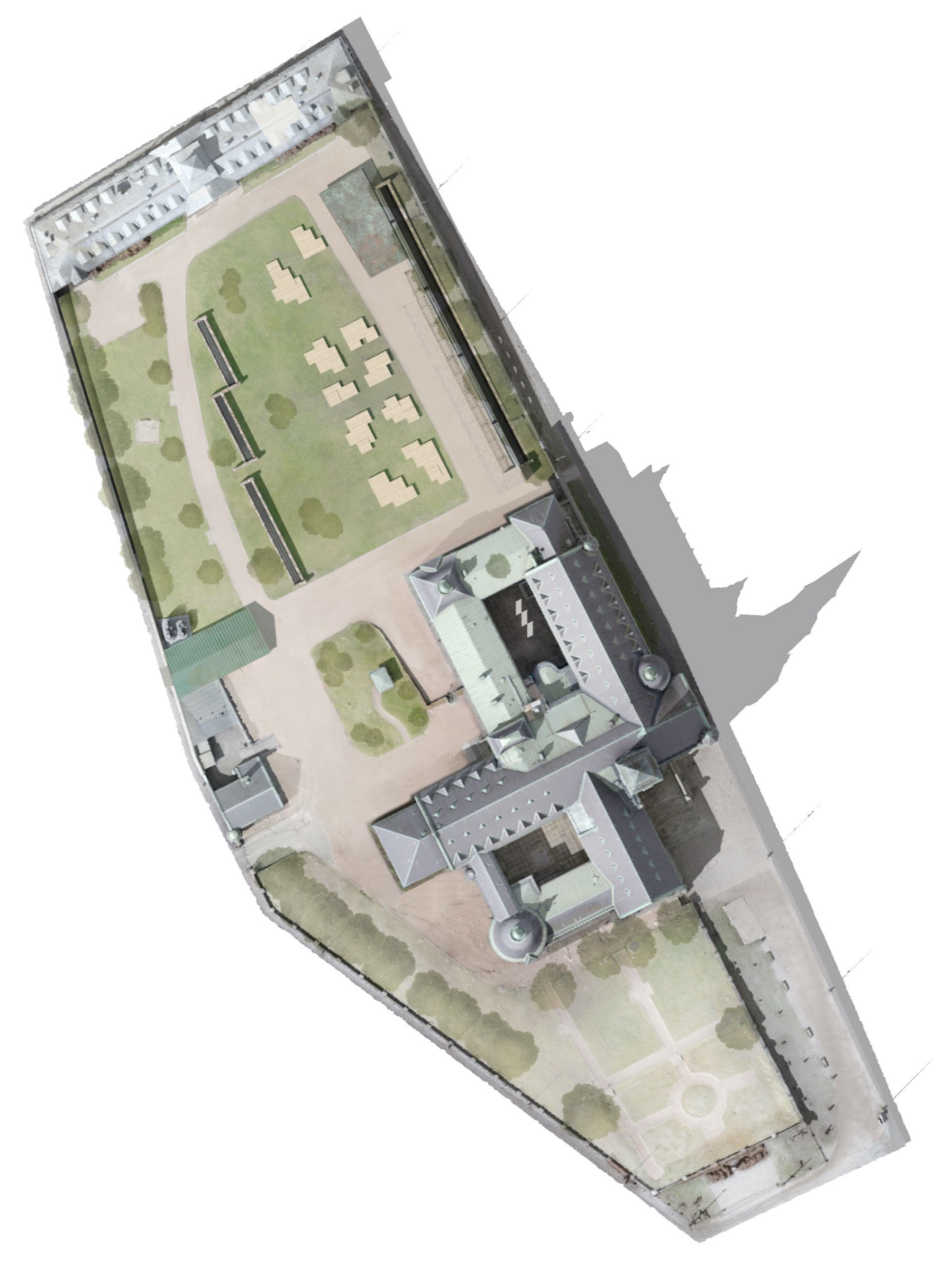
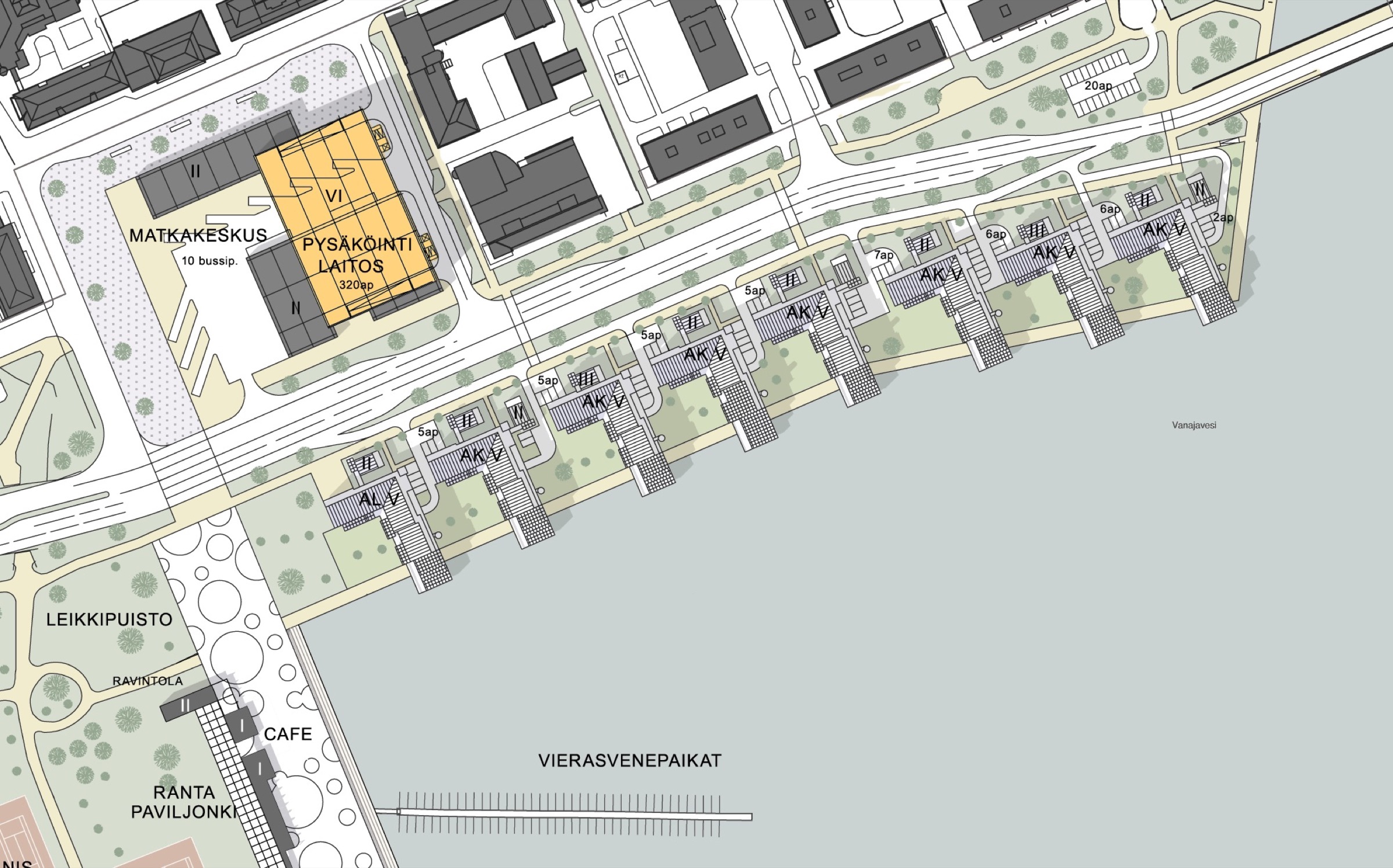
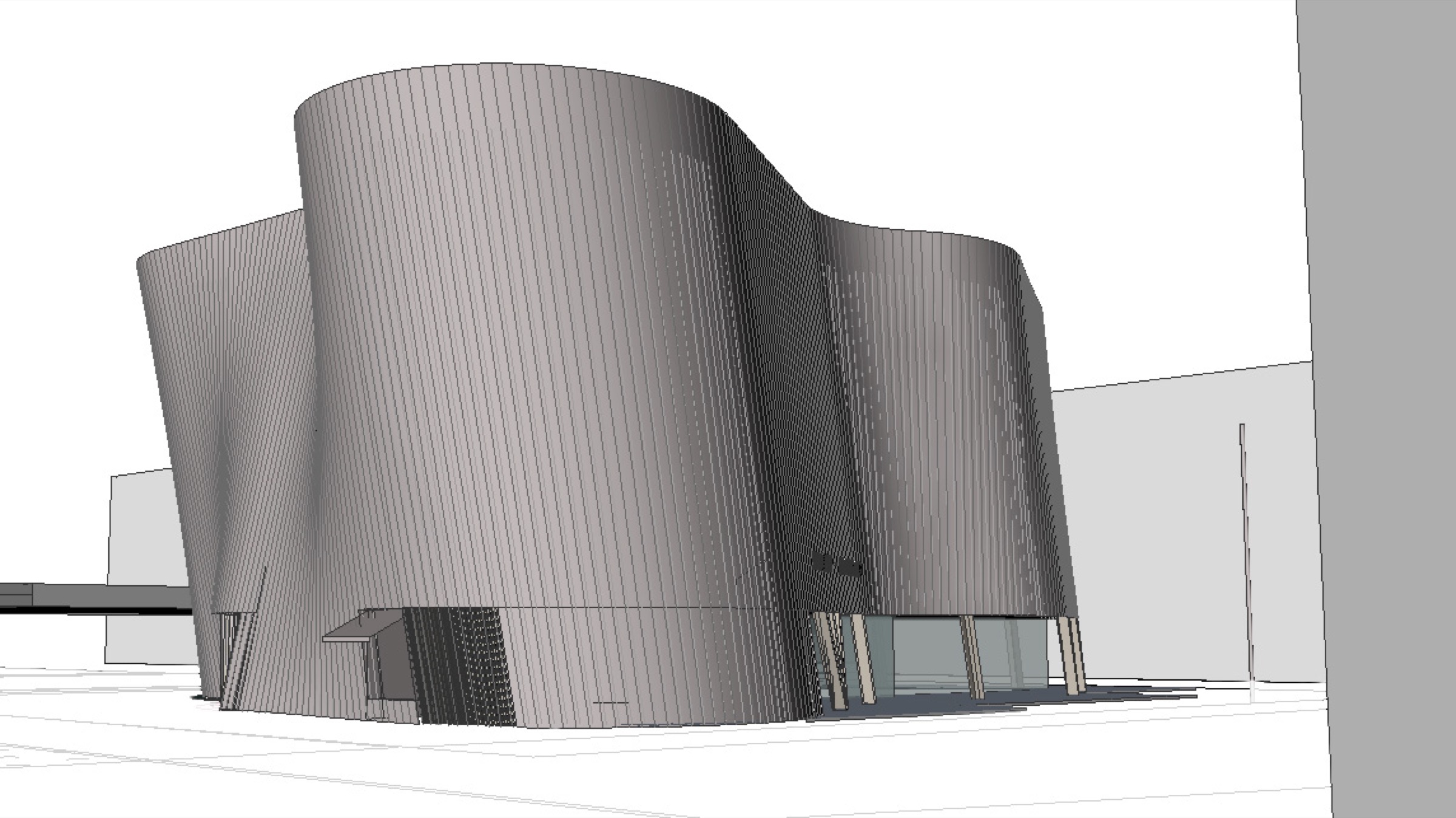
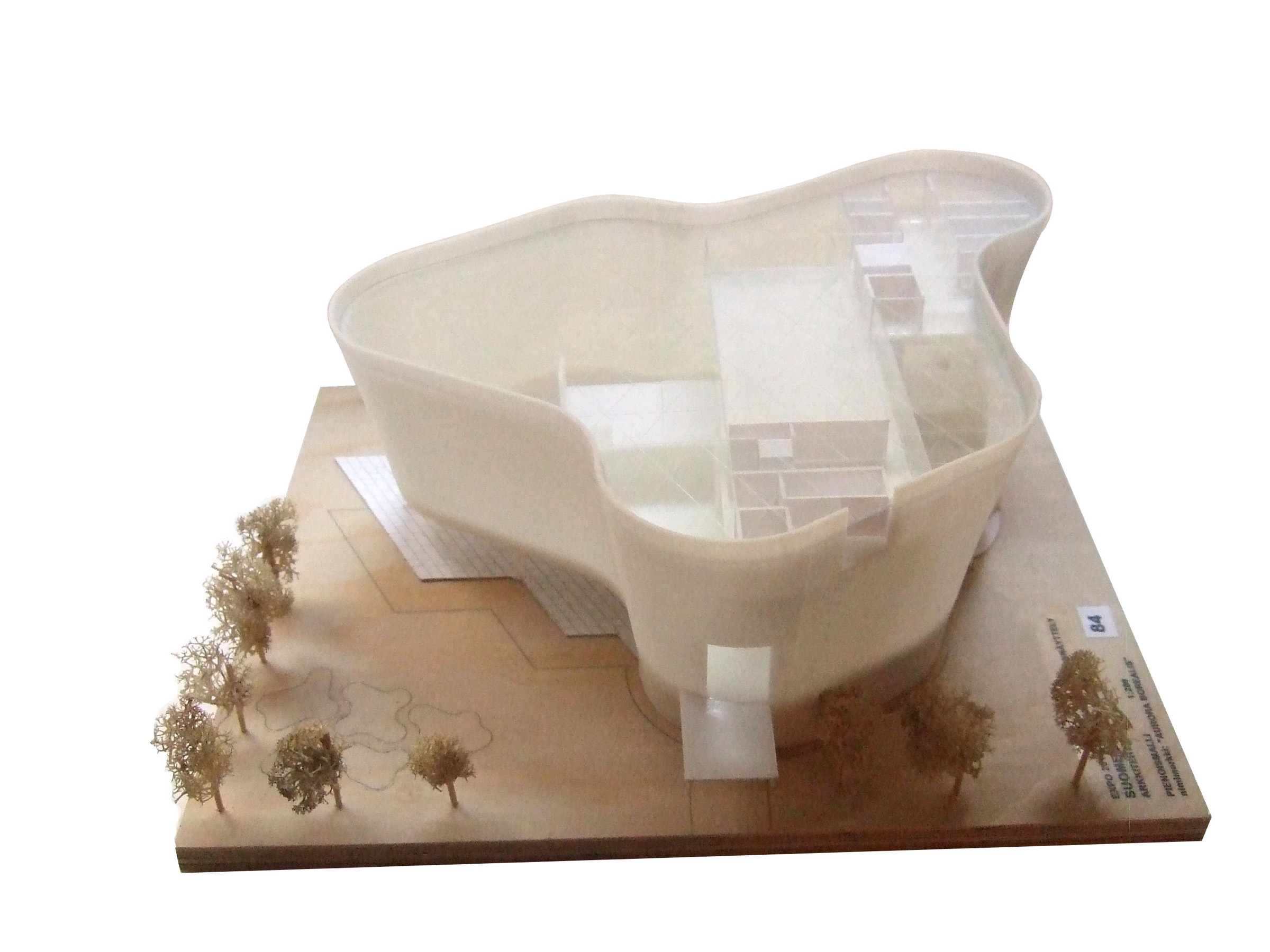
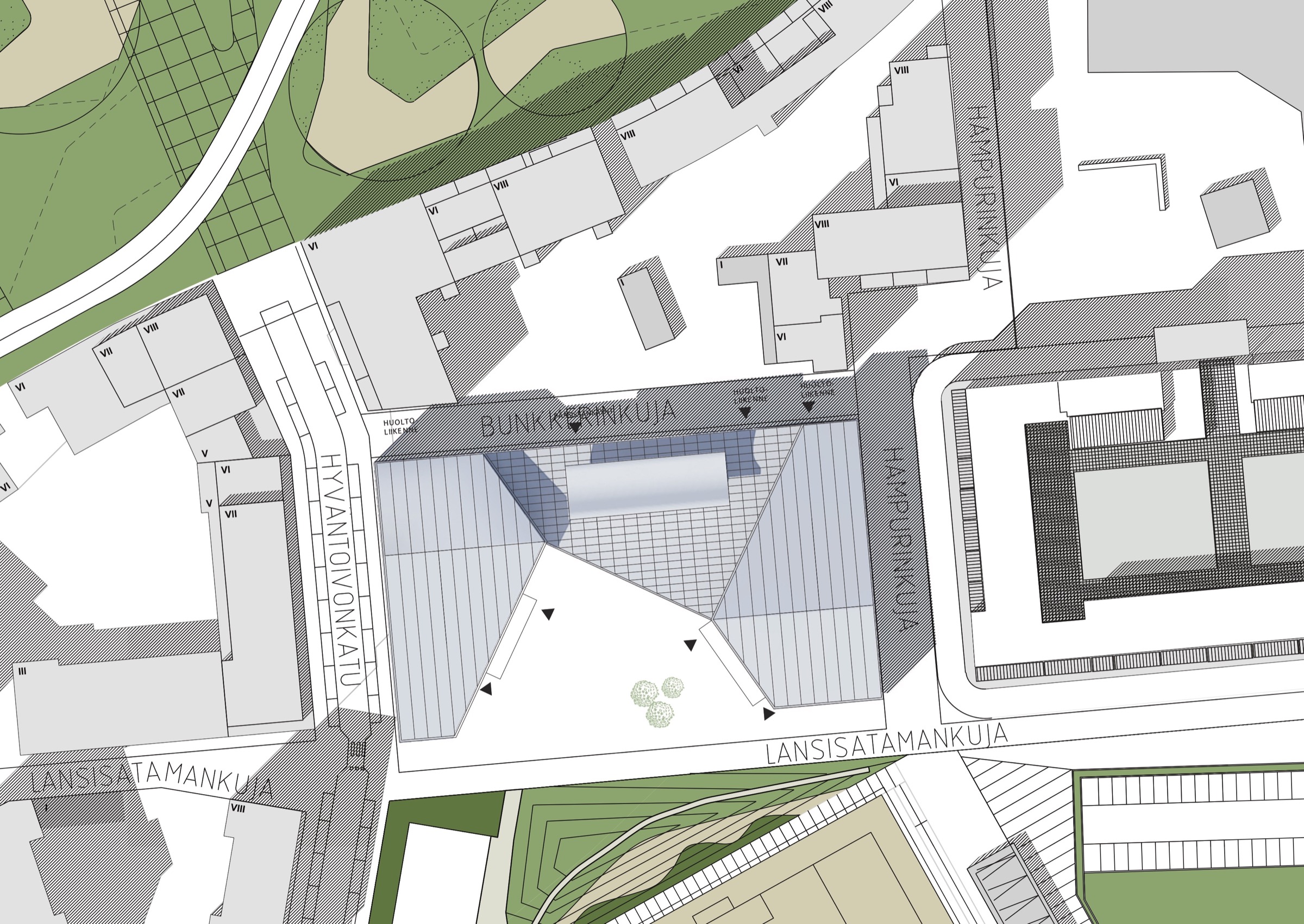
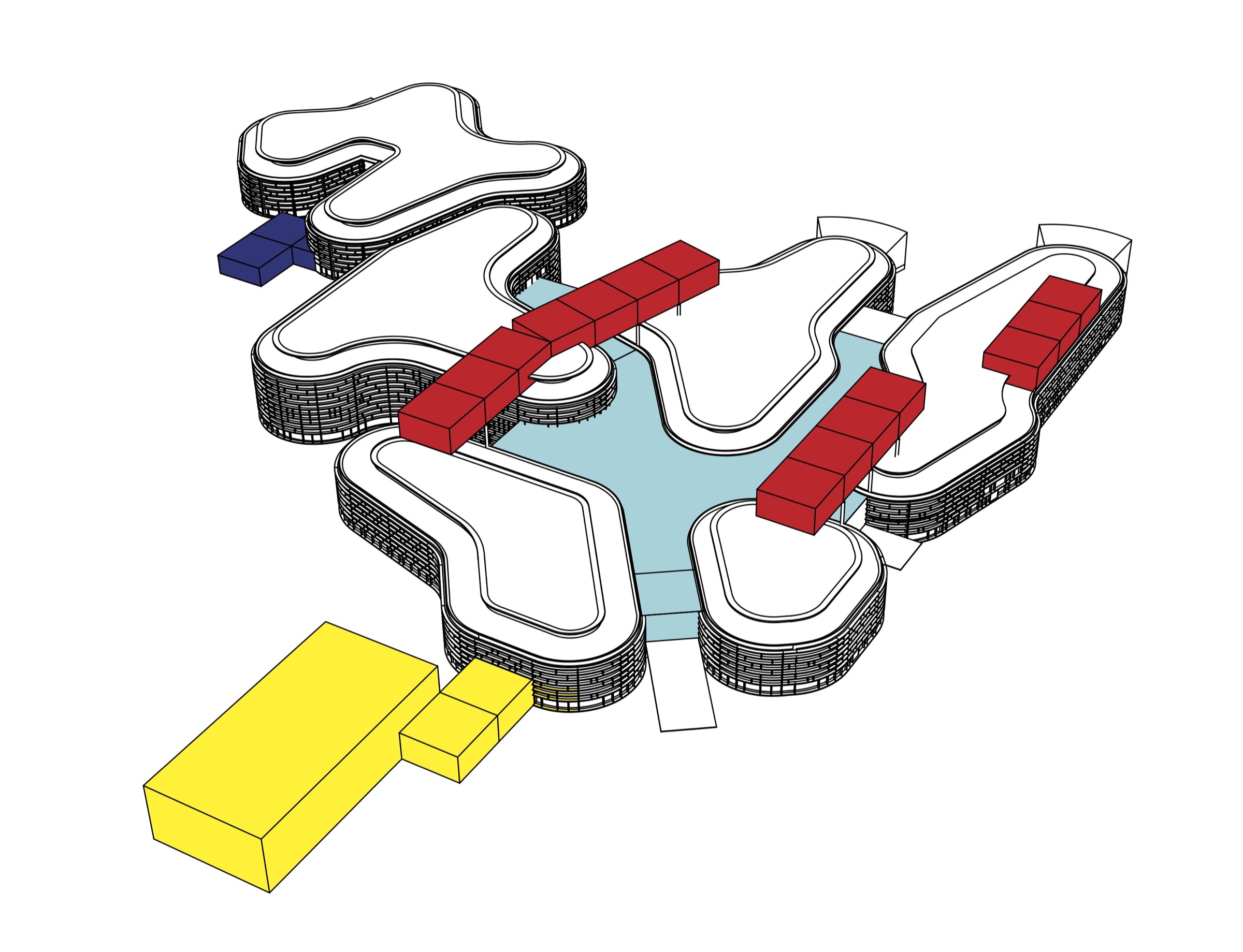
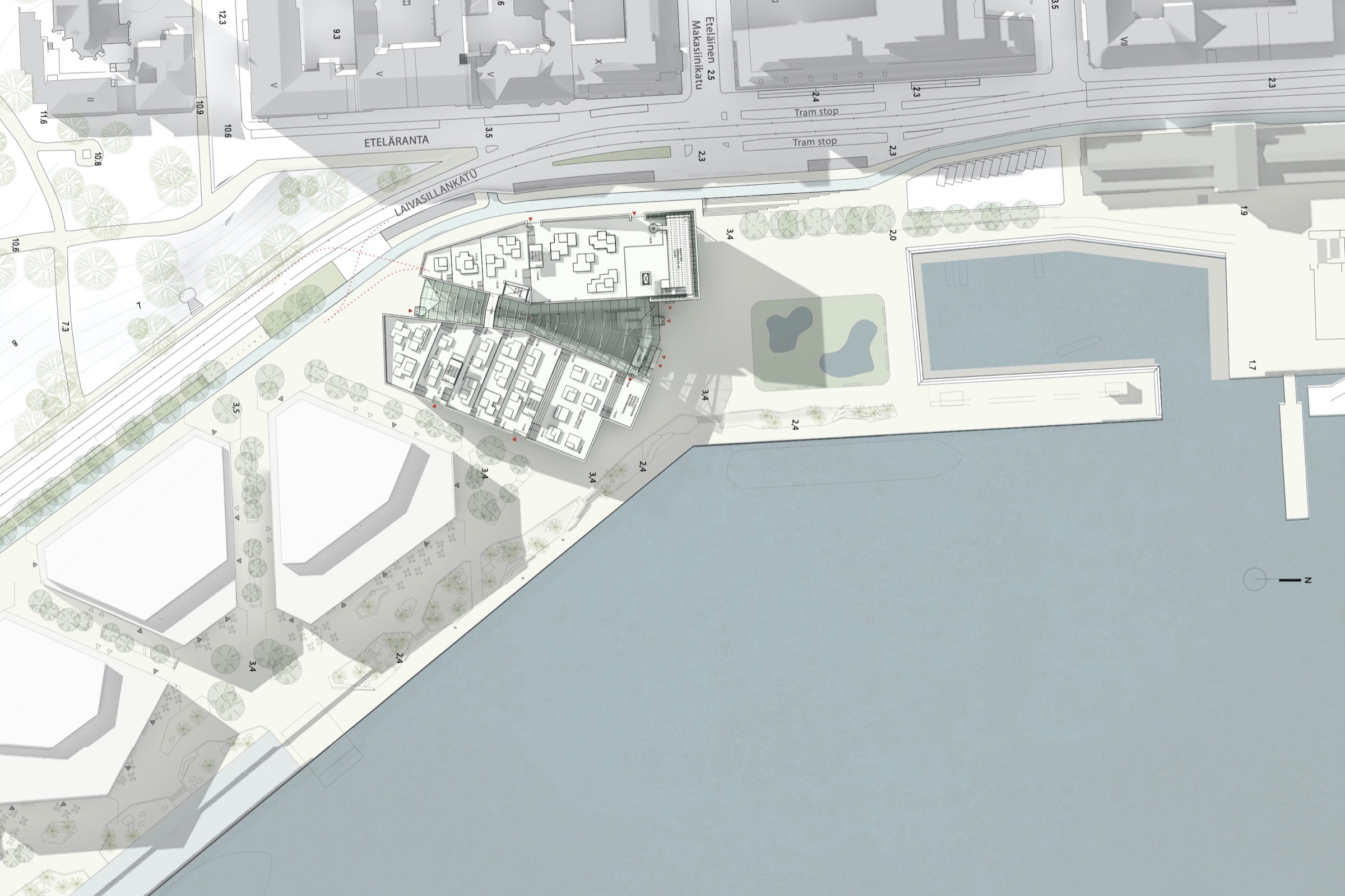
In this competition proposal, the museum building is placed on the site diagonally relative to the street grid, leaving the plot’s northwest corner as a basin — square/park area; likewise, the southeast corner of the plot opens the park area’s view toward the archipelago sea. A small park with pools opening in front of the new residential blocks increases the appeal of this urban space. Space remains at the plot’s west end for a reduced small-boat harbour basin, if such is decided.
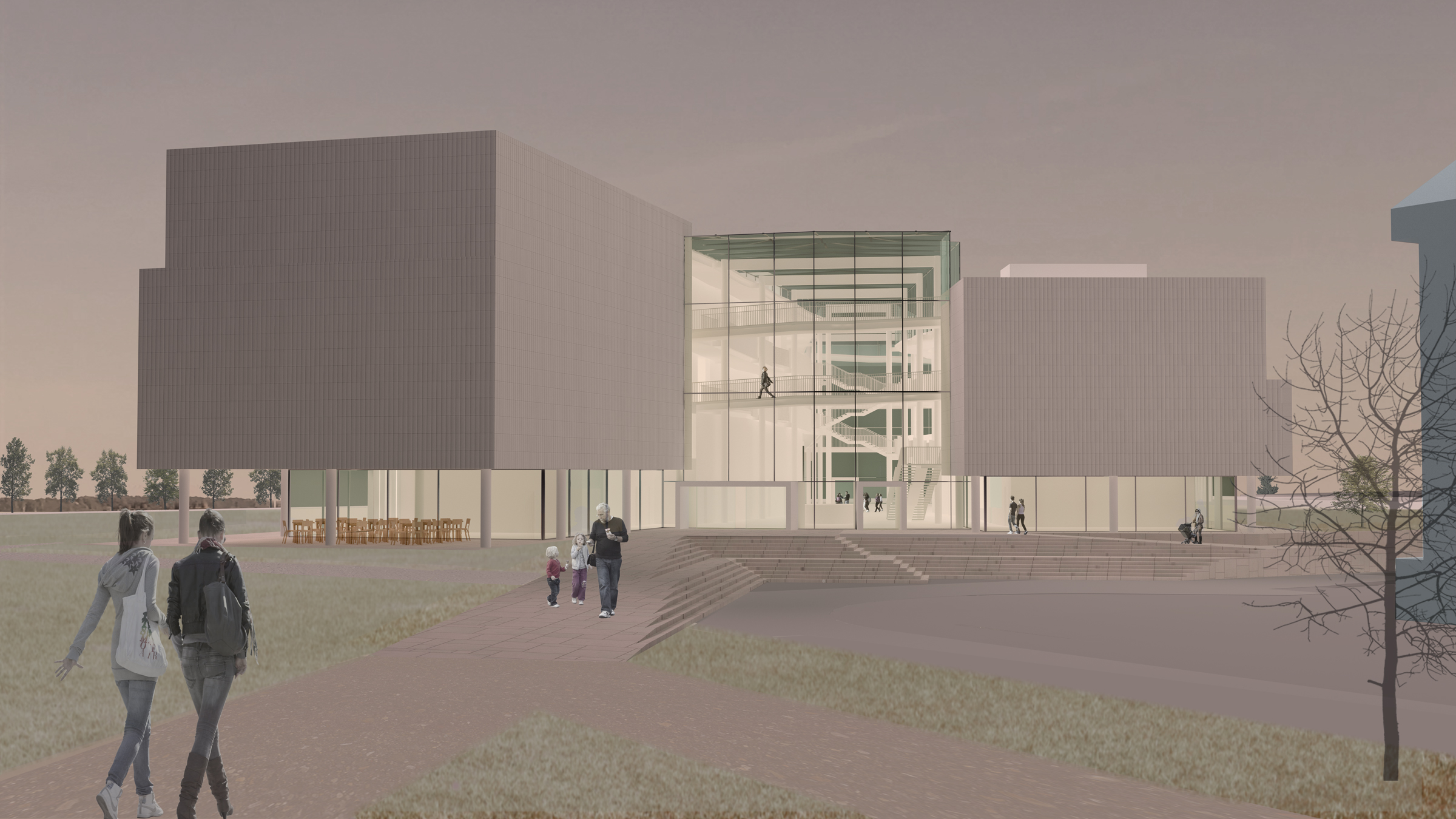
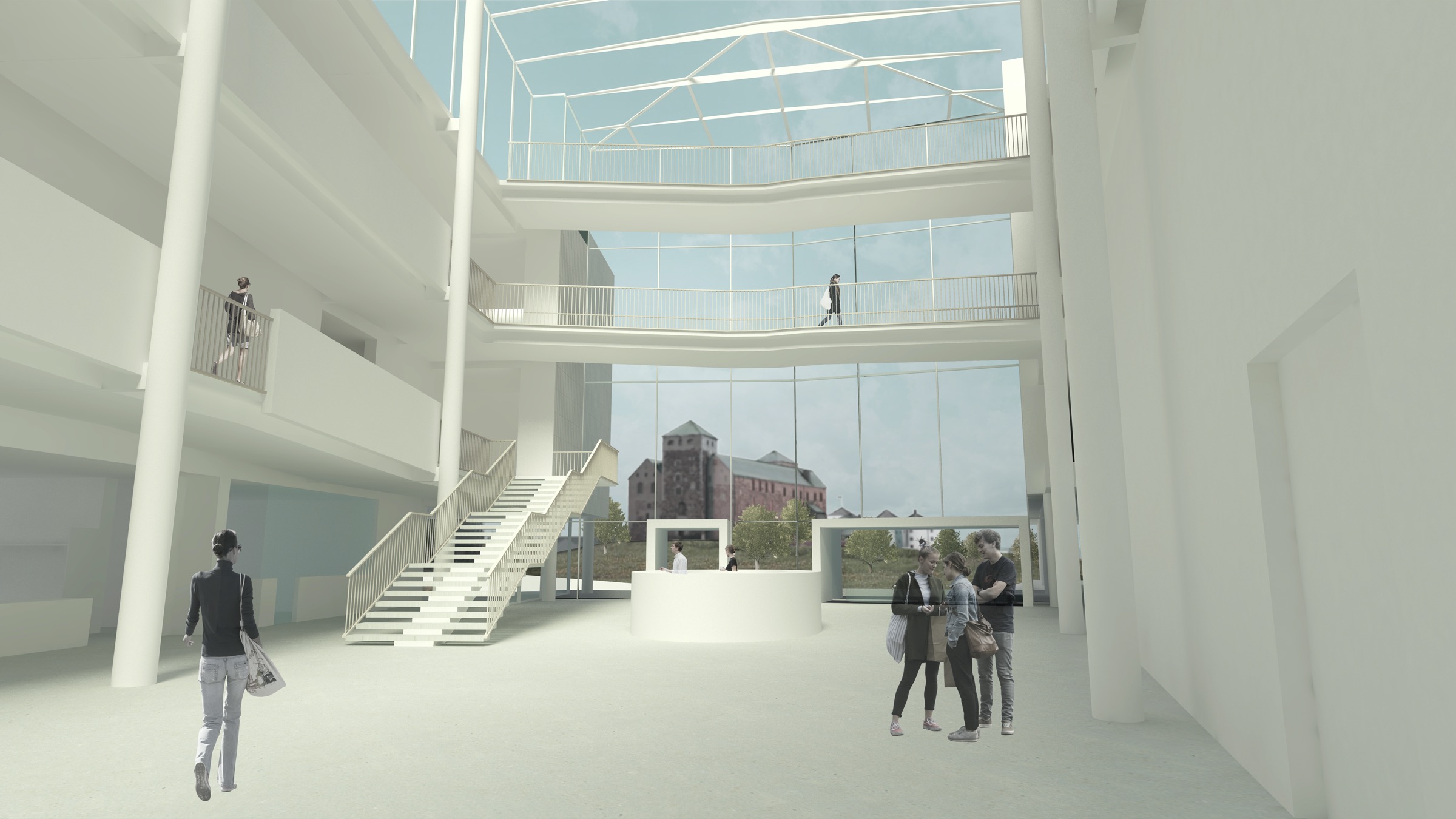
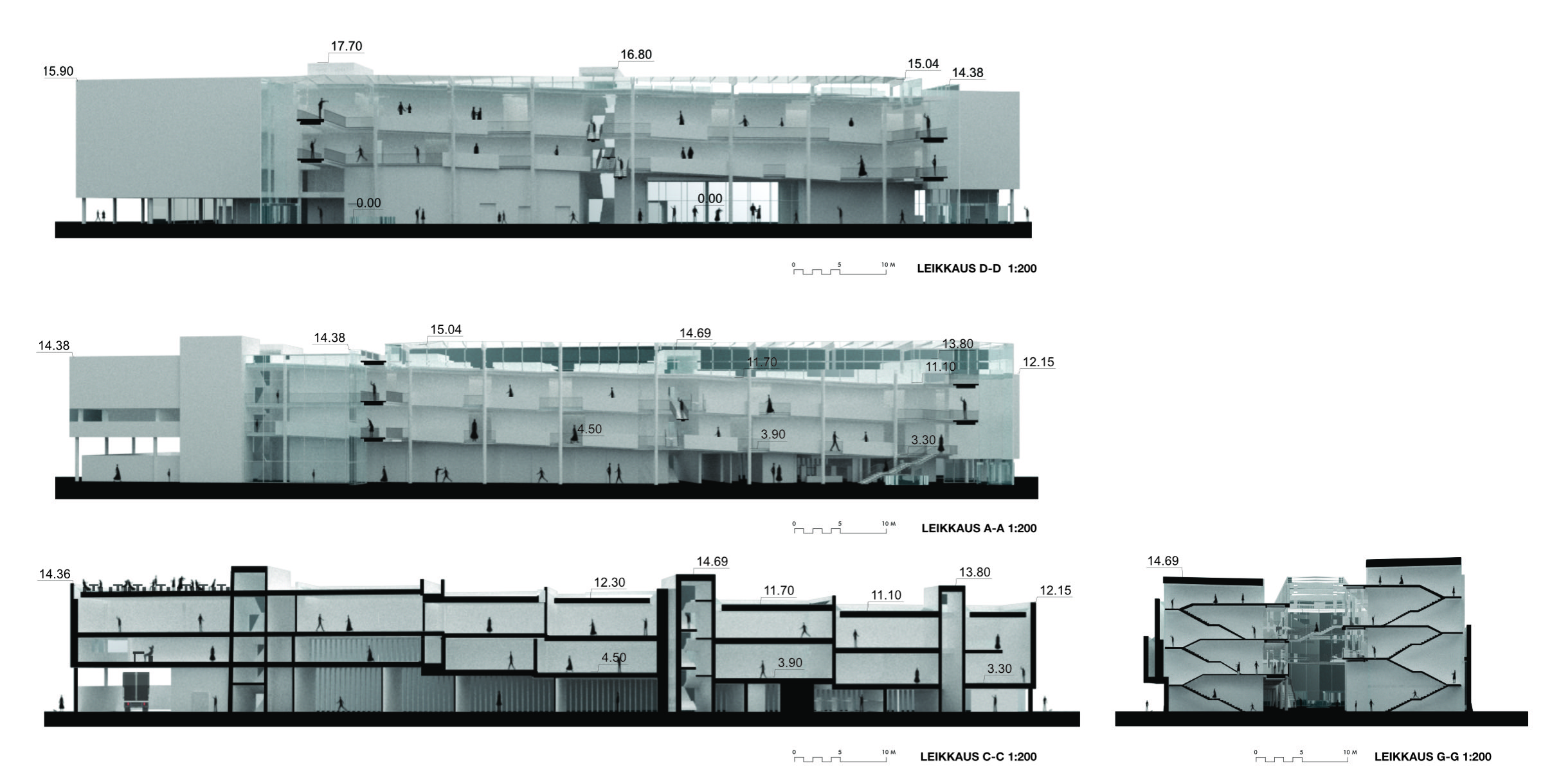
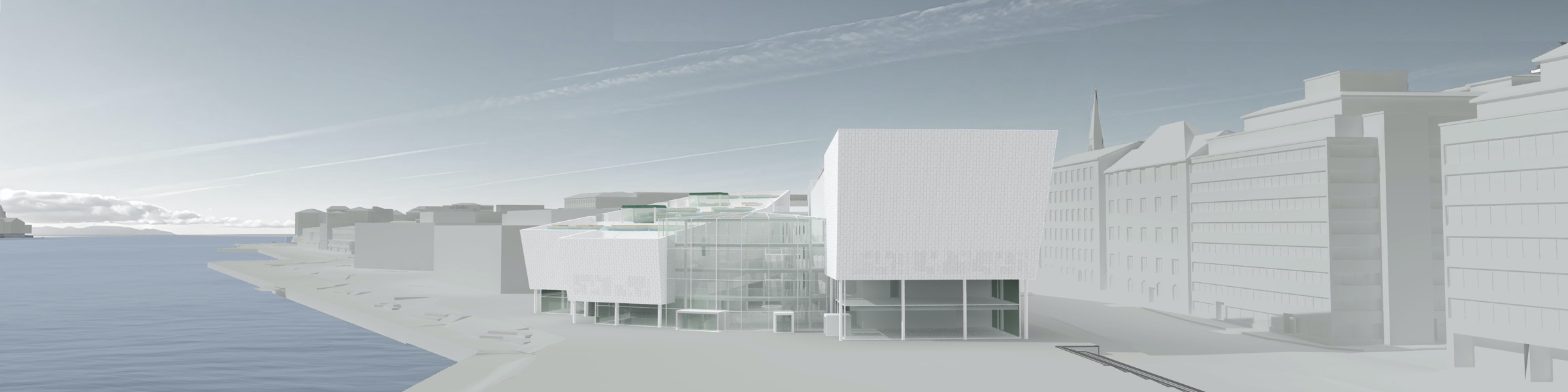
The building’s wing sections frame an entrance plaza at the end of Satamakatu. The lobby spaces pierce the building, creating an axis: one end opens to a view of Turku Castle, the other to the archipelago sea and the setting sun.

The museum is easy to navigate — visitors can choose: the 4th floor is a roof terrace; the main exhibition spaces are on the 3rd floor; all rotating exhibitions are on the 2nd floor — in principle, the route proceeds downward. From the ramp-gallery corridor of the lobby, a changing view opens to this magnificent landscape on each circuit.

THE NIEMI AREA, located on the shore of Lake Vesijärvi in Lahti, is in the process of being vacated of its industrial use, and it will gradually be transformed into a diverse urban residential environment. The companies Polt- timo and UPM-Kymmene, which both operate in the area, organised together with the City of Lahti an ideas competition for the design of the shoreline area, the results of which
will be used as a basis for the further town planning. The aim is for the city district to rely on the natural environment and the history of the location, and to make use of the potential of recent trends in the circular economy, mobility and energy production.

The main function of the competition was to define the amount and method of suitable construction that could be adapted to the environment in question. Most of the old industrial buildings will have to be demolished due to their poor condition, but one particular warehouse had to be preserved and taken into consideration in the planning of the construction and public outdoor spaces. The objective was to connect the university campus located in the eastern part of the area and the new urban residential and workplace area to the lakeside milieu.

The City of Tampere organised an open architectural competition for the design of the extension to the present Tampere Art Museum, which is a converted granary designed by Carl Ludvig Engel, as well as the surrounding area. The competition was looking for high-quality and imposing architecture and urban space that respect the values of the existing urban structure and architecture. The organisers wanted the new building and its surroundings to form a cohesive totality, which would increase the attractiveness and recognition of both the city of Tampere and the Art Museum itself.

In addition to the museum extension, the organisers were also looking for ideas for developing and complementing Pyynikintori Square as a public space. In terms of both its cultural history and cityscape, the square is a key part of Tampere. The aim was to improve the square’s overall appearance and rationalise its functions. Also housing, commerce and offices suitable for the location were to be placed in the competition area.

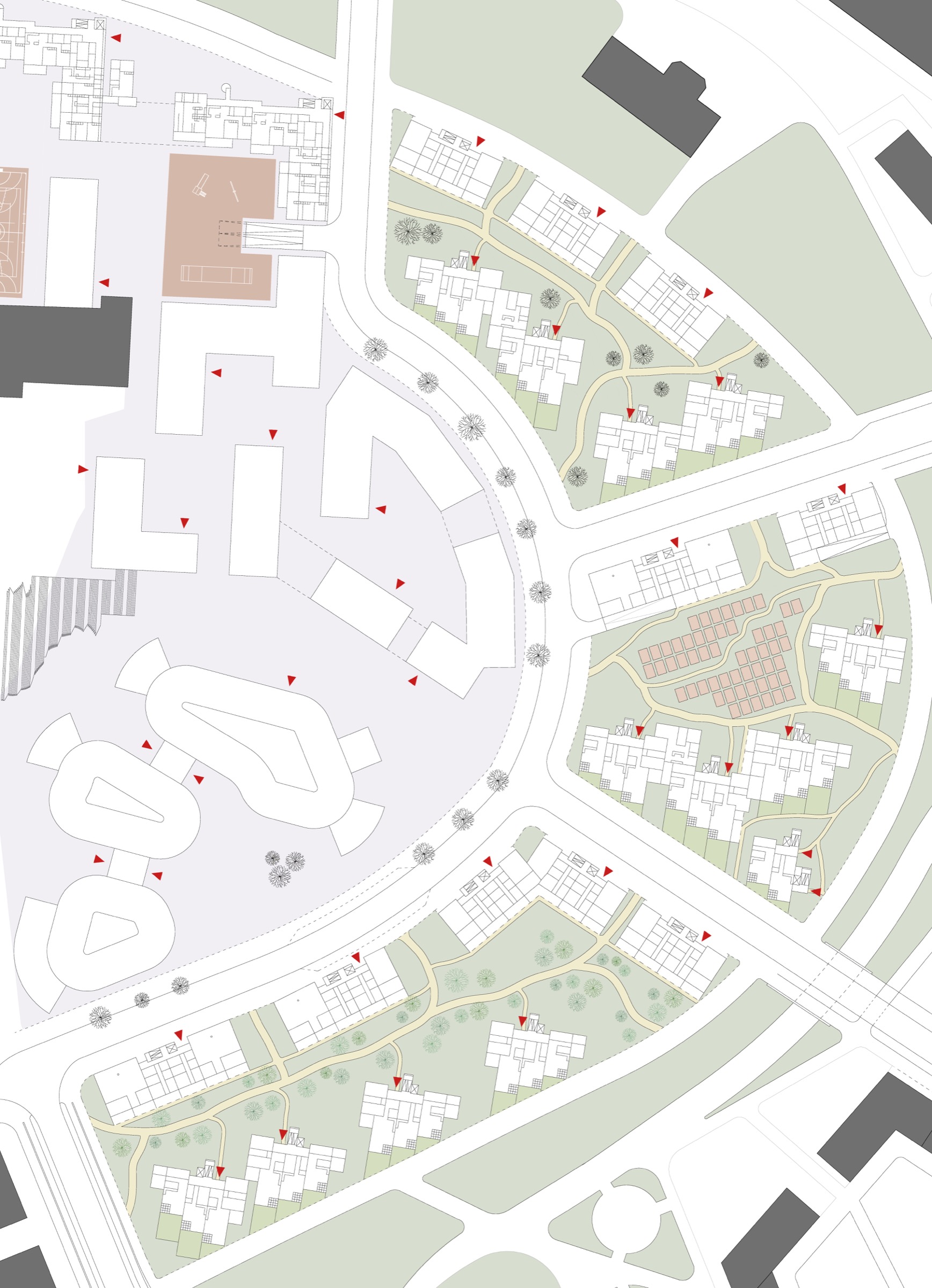
In this proposal, infill housing masses are planned for the Pyynikintori city environment, carefully considering the sunniest spots of available lots. These buildings are creating a more gentle microclimate and humanscale for oversized Pyynikintori. All south-facing terraced balconies of the new apartment buildings are filled with natural light. The building type also helps to reduce traffic noise thanks to its backside corridor-like stairwell. The south-sloping roof surface of all these new apartment buildings is well-suited for harnessing solar energy.

There have been almost 200 years of tradition for public saunas in Helsinki. In 1907, there were 49 public saunas and spas in the city, but their popularity declined as people began to install bathing and sauna facilities in their own homes.

In recent decades, this old tradition has become increasingly popular and fashionable as a new cultural habit. Nowadays, there are around 10 public saunas in Helsinki, and this is one of the newest. 

This design project consists of the spatial design of the entire area and the sauna spaces. The main challenge of this project was to follow the old tradition of public saunas in the city and create a modest, relaxing sauna complex that welcomes everybody.

The café-restaurant features heated industrial concrete floors, graphite grey walls, and red tiles on the kitchen side. We removed the dropped ceiling, and the ceiling was painted black. The sauna area’s walls are covered with dark tiles, while the floor tiles are light yellowish-grey. The sauna bench is designed with a high structure to ensure both high-quality steam and sufficient air volume, even when many people are present.

The apartment block is designed by Sauerbruch Hutton Architects.

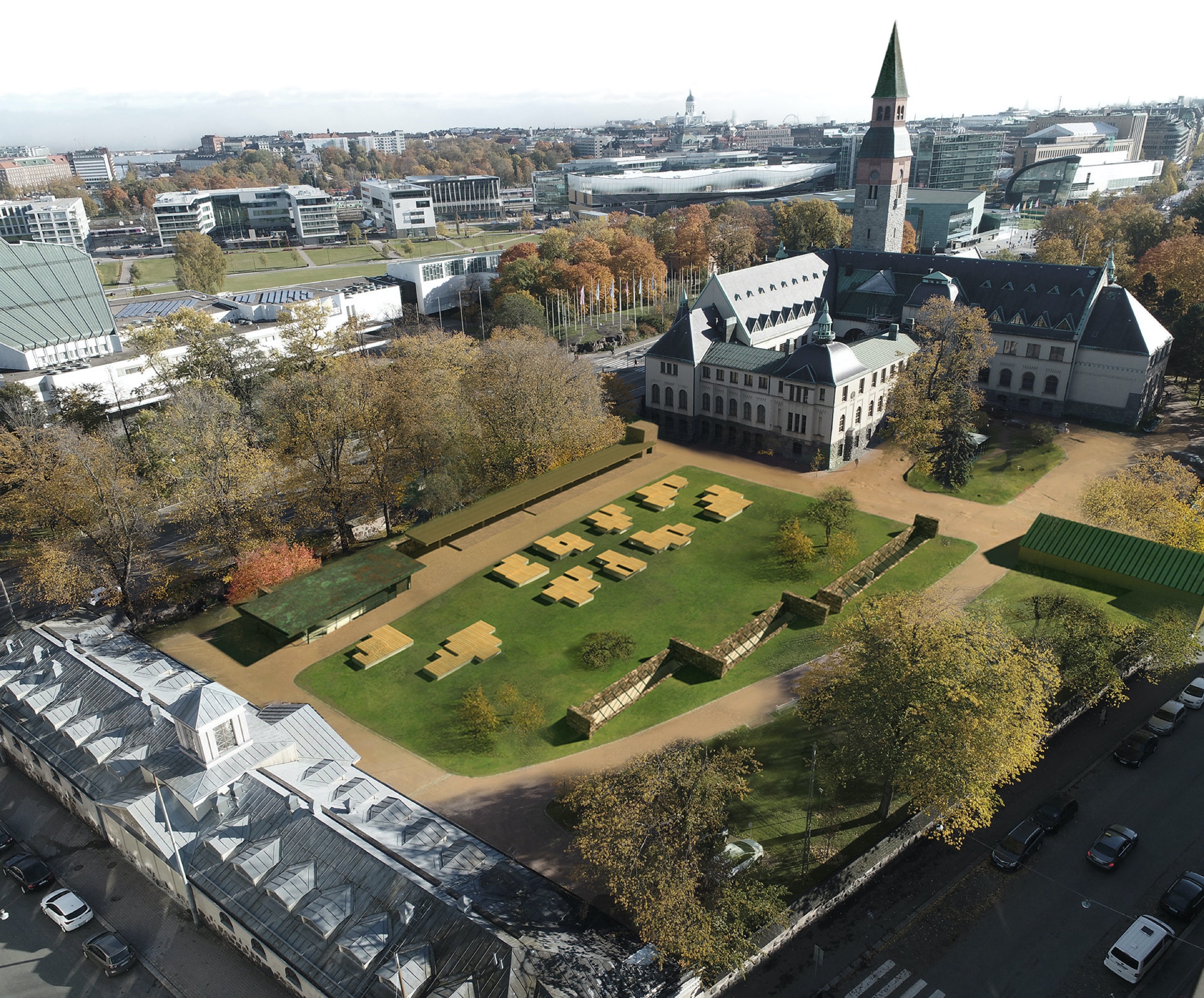
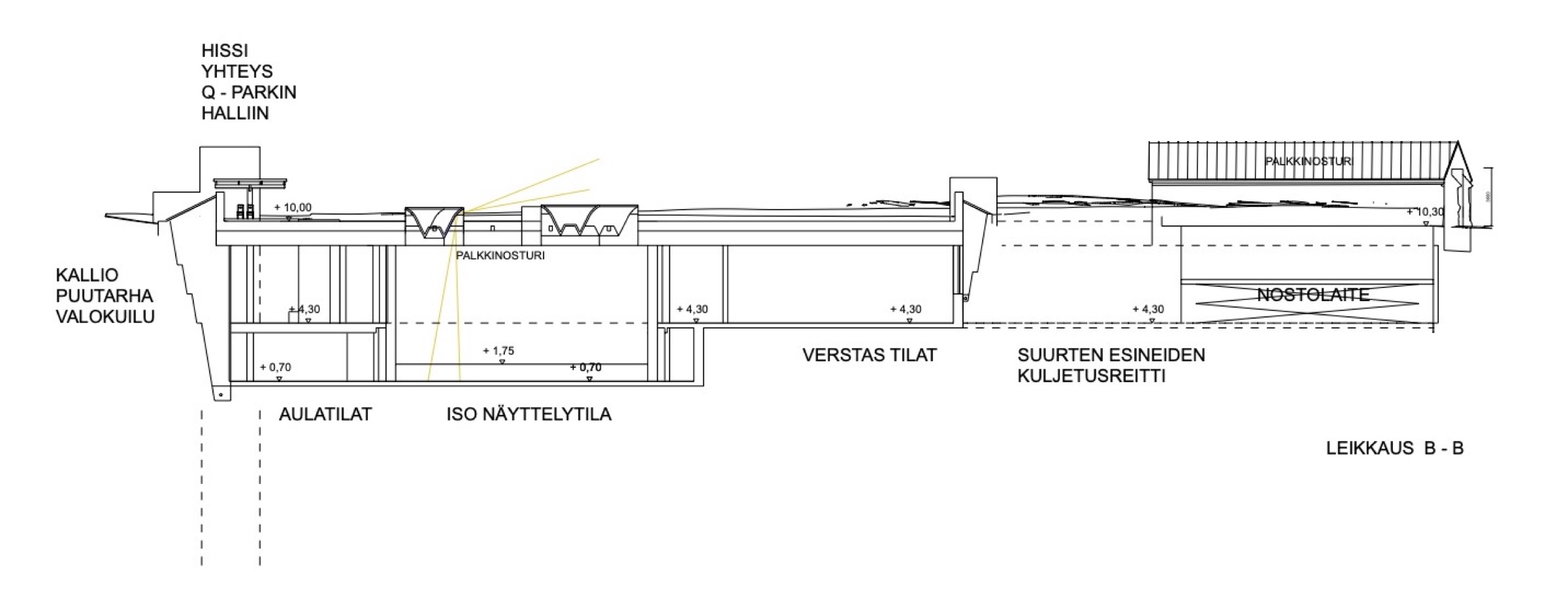
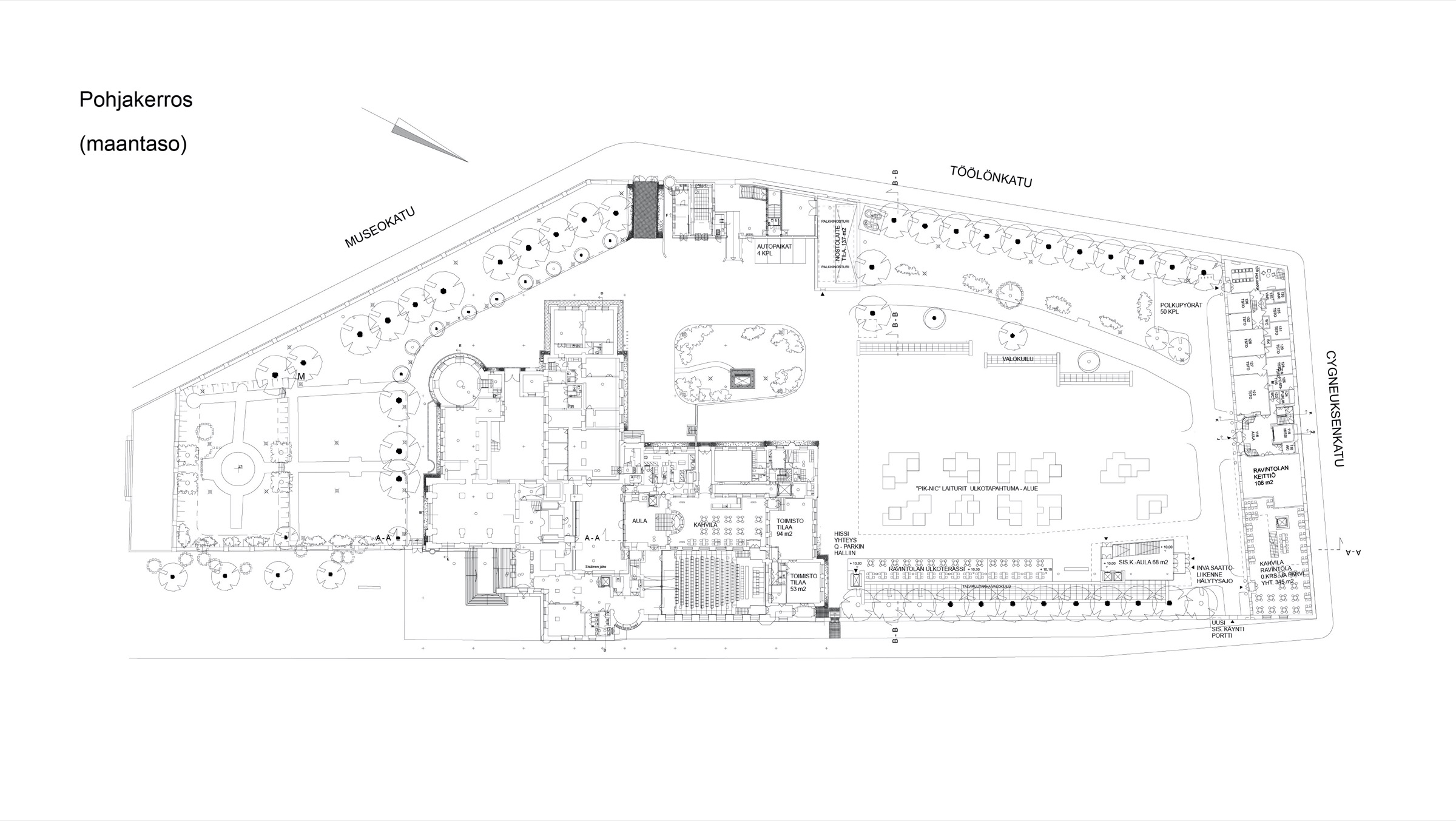
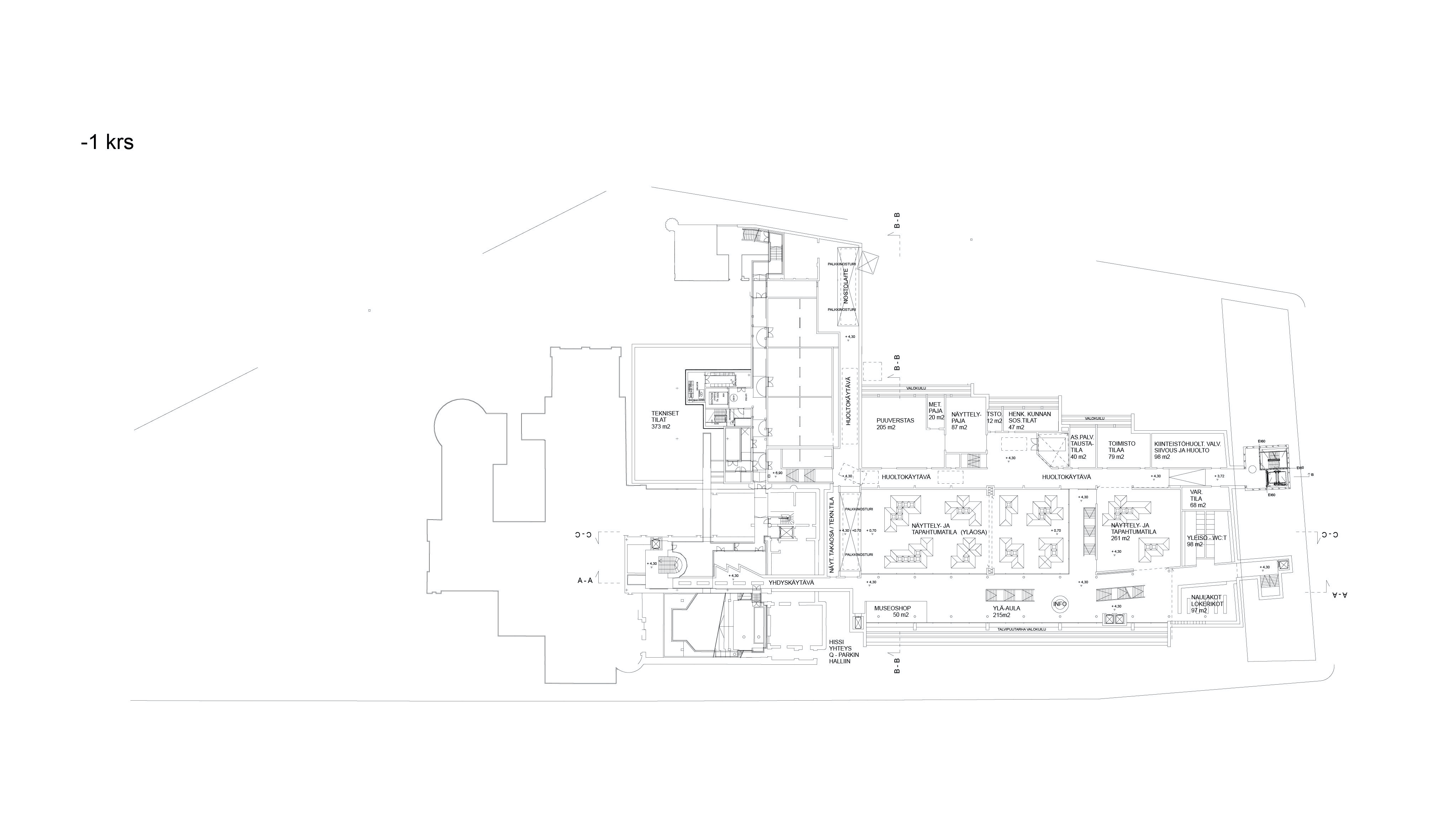
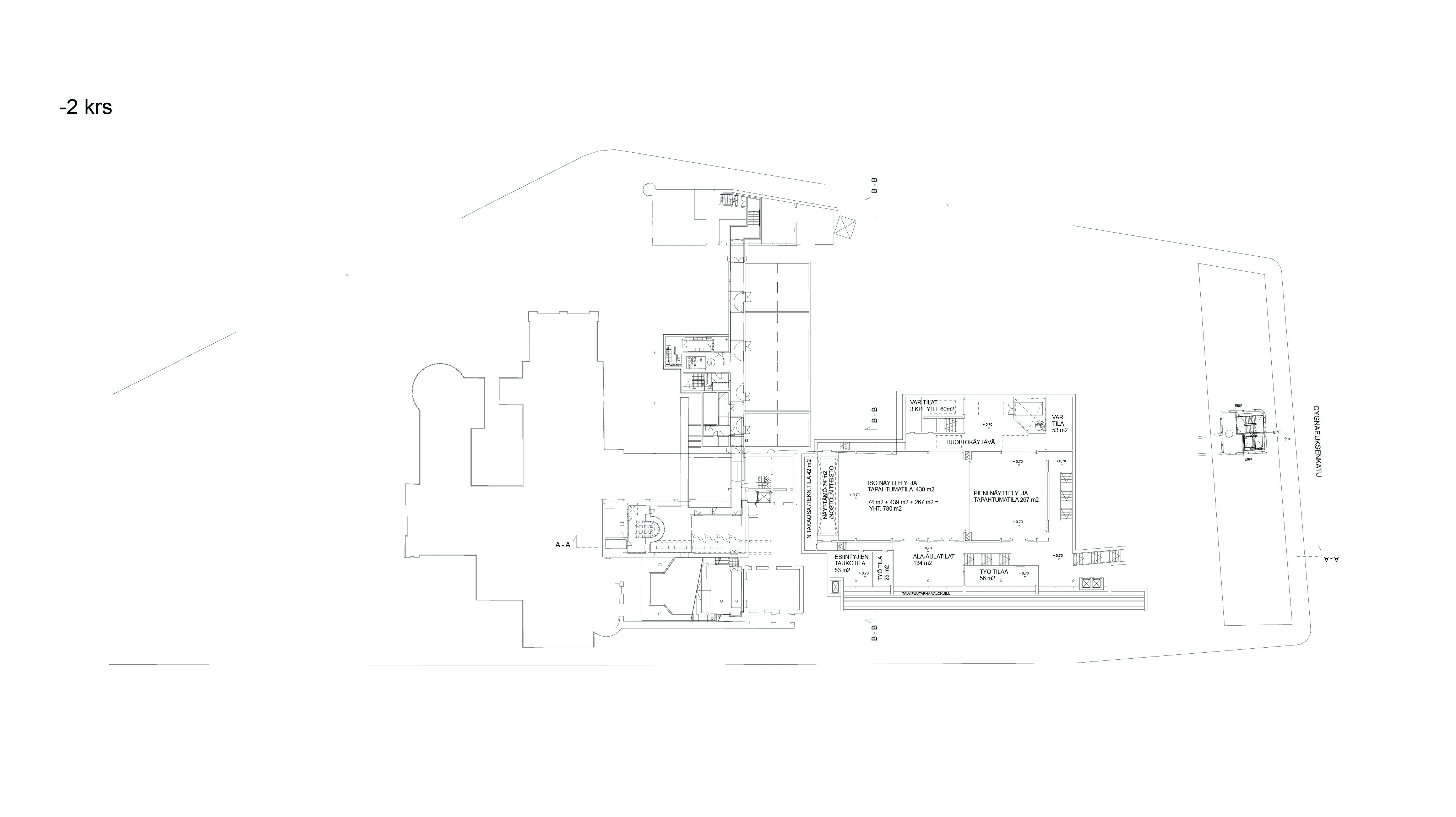
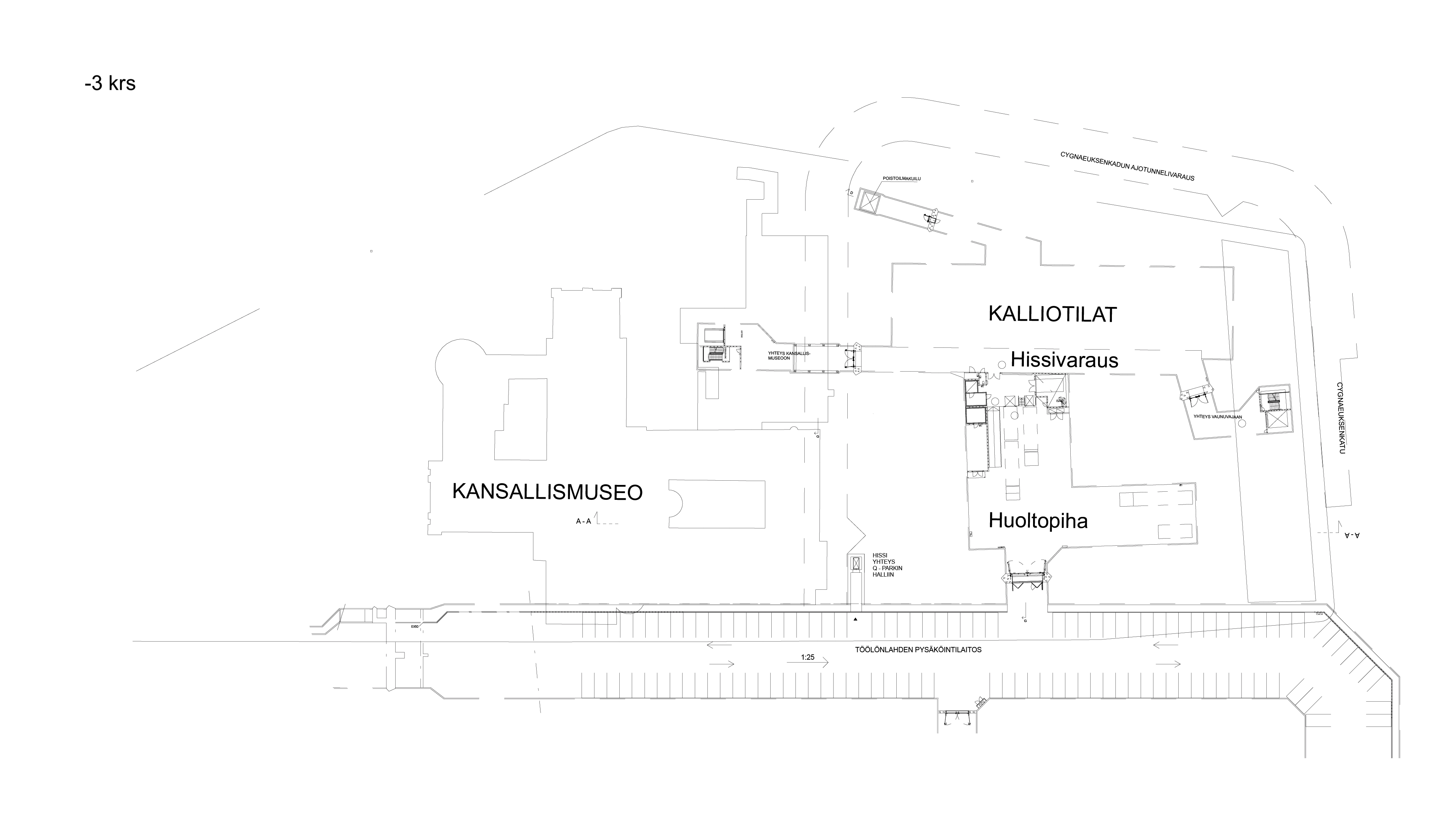
Uusi Kansallinen (in English: the New National) was a two-stage, open ideas architecture competition for the design of an Annex to the National Museum of Finland in Helsinki. The competition has been jointly organized by the Finnish Heritage Agency, the National Museum of Finland, and Senate Properties.

The Annex will be built adjacent to the historic and distinguished main building designed by Herman Gesellius, Armas Lindgren and Eliel Saarinen.

The new Annex will facilitate the production of large-scale and technically demanding exhibitions for the National Museum of Finland. In addition to exhibitions, its multi-use, easily adaptable spaces will be well suited for a diverse range of cultural, art and recreational events, conferences and other functions.

The historic main building and its new Annex, together with the new, year-round publicly open courtyard park for different communities and urban events, will provide a unique, highly diverse range of valued experiences. The core of this concept is a multicultural perspective on Finnish society, its cultural heritage, and its evolution. Uusi Kansallinen is to be a functional and architectural reinterpretation of what the concept of ‘national’ means to us today.

The diverse international program of the National Museum of Finland aims to broaden the understanding of our rich, culturally complex history and habitat and helps to perceive their implications to our present and future lives.

The aim of the competition was to find an exhibition building for the Finnish pavilion in the world exhibition to be held in Shanghai in 2010 – one that would be architectonically of a high level, unique to Finns, different to the others, and express a new architecture.

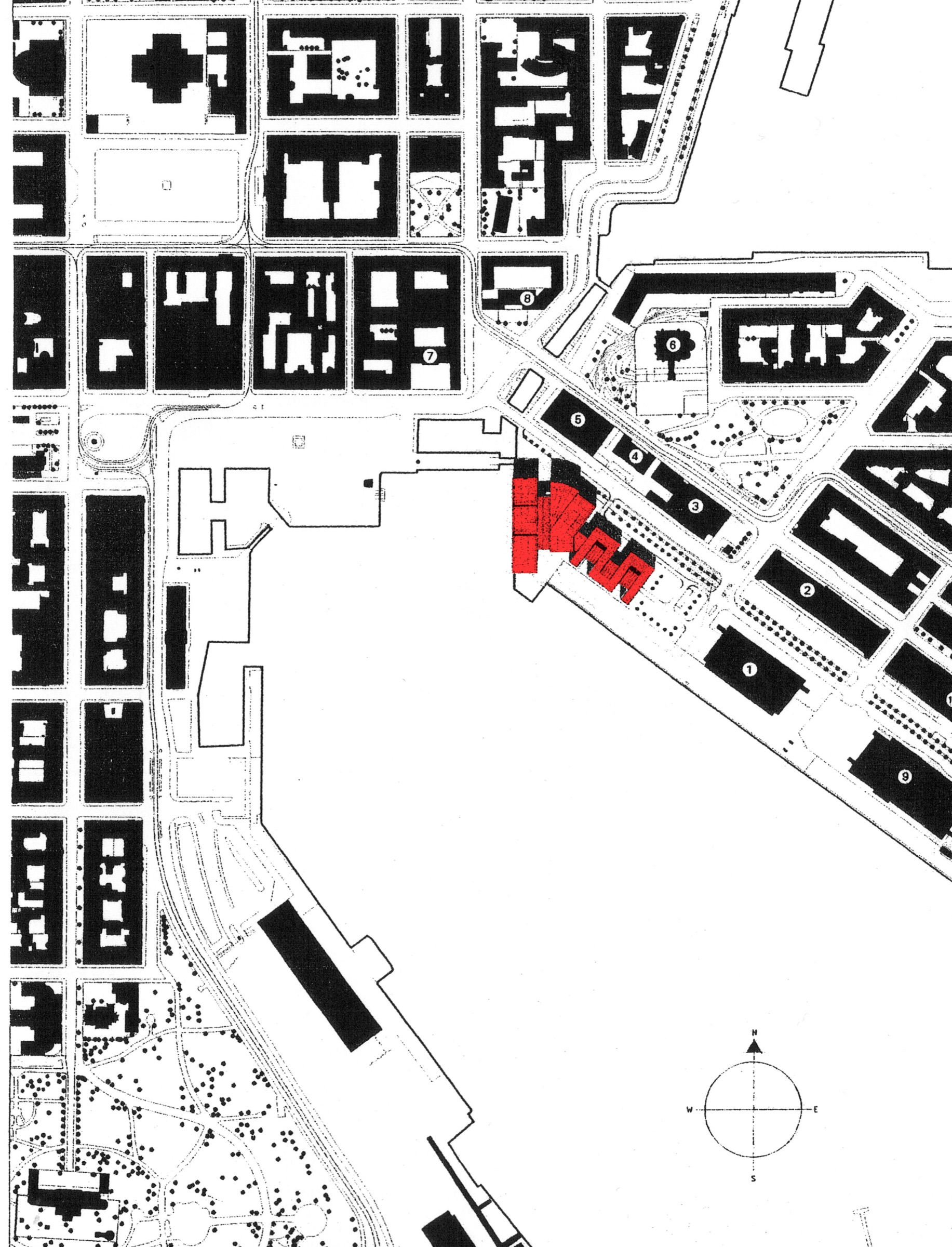
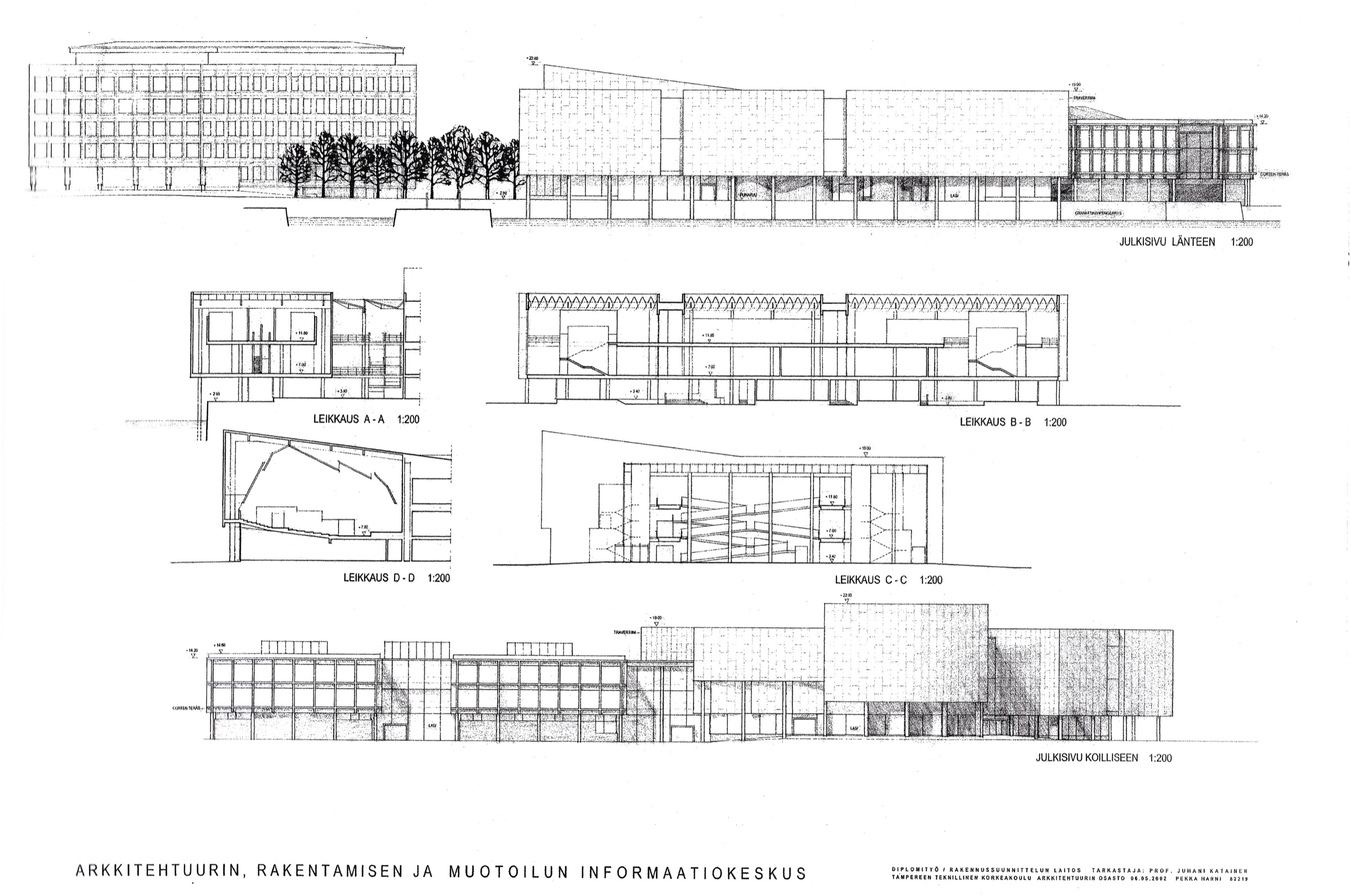
The objective of the Armi project was to bring together the national organisations in the field of architecture, building and design. Operating in the same building will create an opportunity for new kind of co-operation, interaction and development of activities. The new information centre will be a prominent flagship of Finnish expertise building. The objective of the competition was to find a solution for the Armi centre that would combine innovativeness, high-quality architecture and technical and financial viability. The site for the project lies in Katajanokka, near the historical centre of Helsinki and Market Square, and the City of Helsinki holds the title to the land.

Jätkäsaari is currently one of the largest new urban development areas in central
Helsinki. New housing for 17 000 residents will be built on the 100-hectare former harbor area, and it is calculated that more than 6000 jobs will be generated.

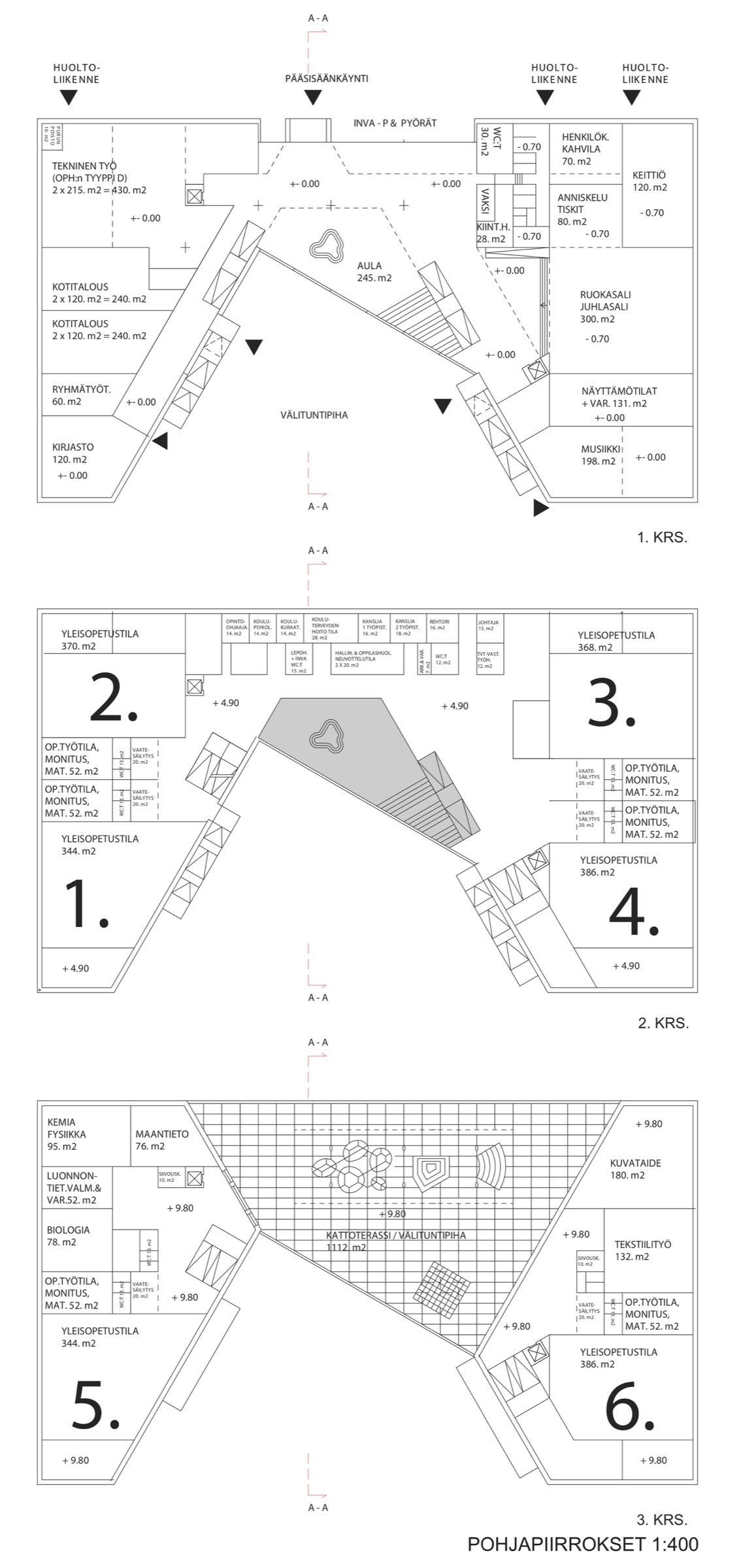
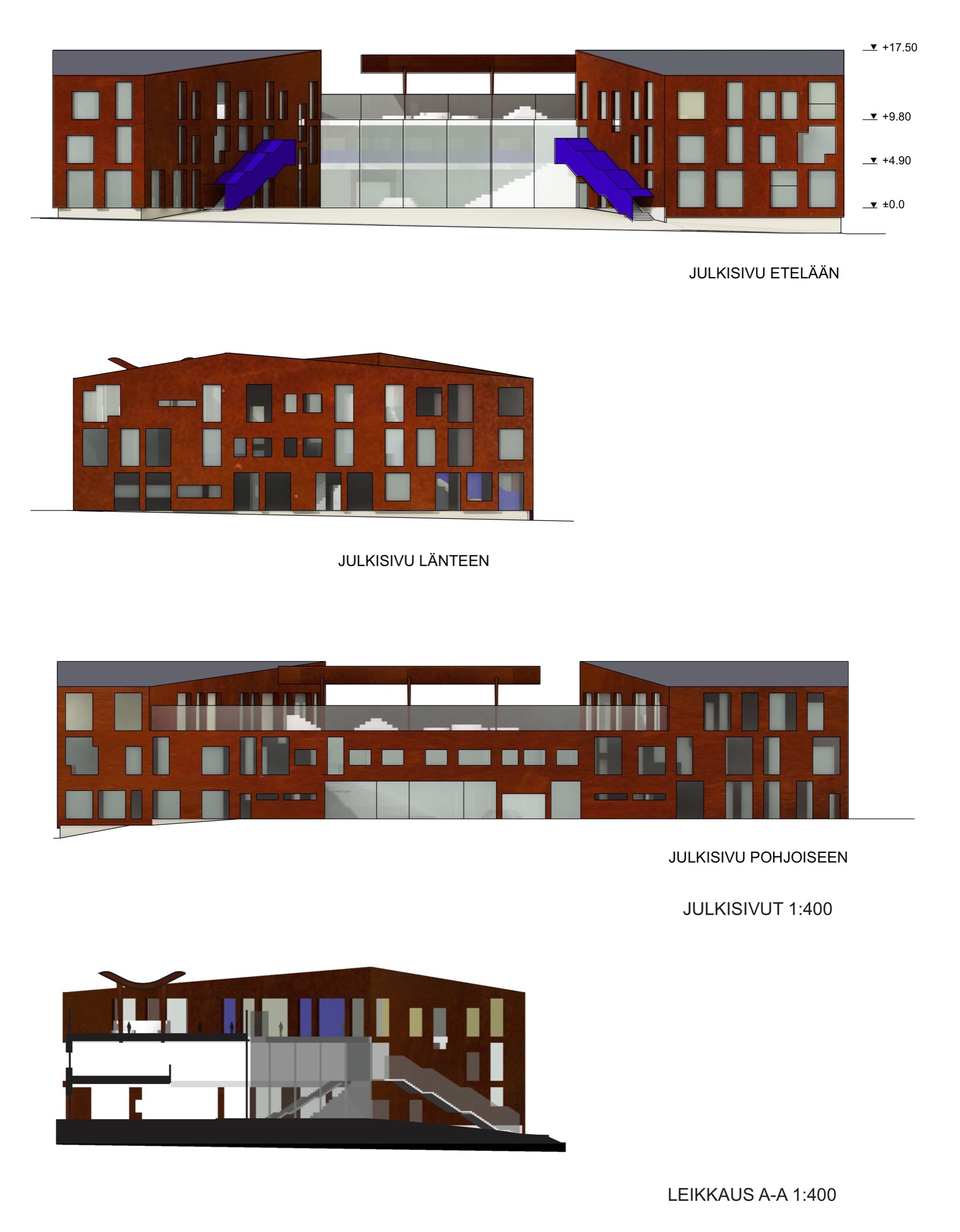
Jätkasaari’s new main school will see for the first time ever Finnish and Swedish-speaking primary schools – Jätkasaaren peruskoulu and Busholmens grundskola – placed together in the same building.

The objective of the architectural competition was to find a design solution for the schools that enriches the cityscape, functions well, is architecturally of a high quality and which also in the future will function flexibly. The evaluation of the proposals focused in particular on the sustainability and maintenance of the design solution in the marine conditions.
The building will be used by approximately 740-800 primary school pupils in grades 1 to 9 (ages 7-15). One objective of the competition was to find a solution that supports the new pedagogics. The school was to be corridor-free and instead
of traditional classrooms the spaces would form open “home units”. Also, flexibility was required of the building, since the goal is to provide facilities for activities for the local residents outside school hours.

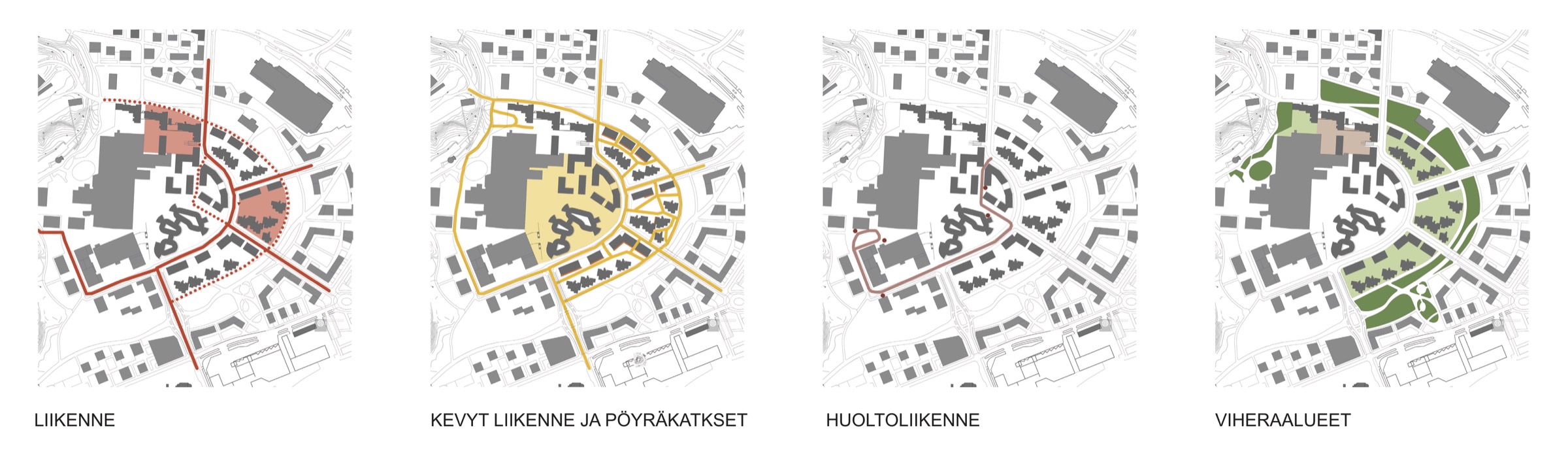
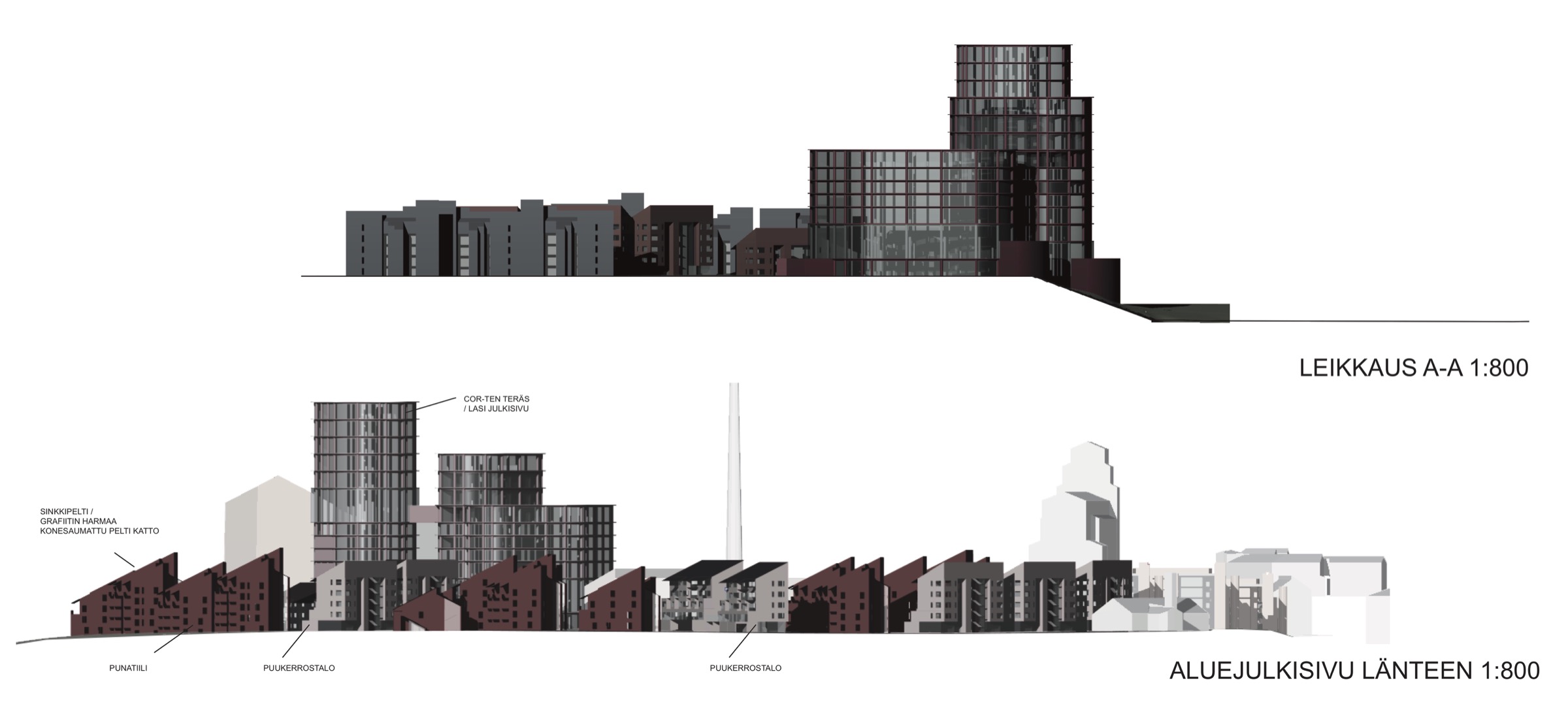
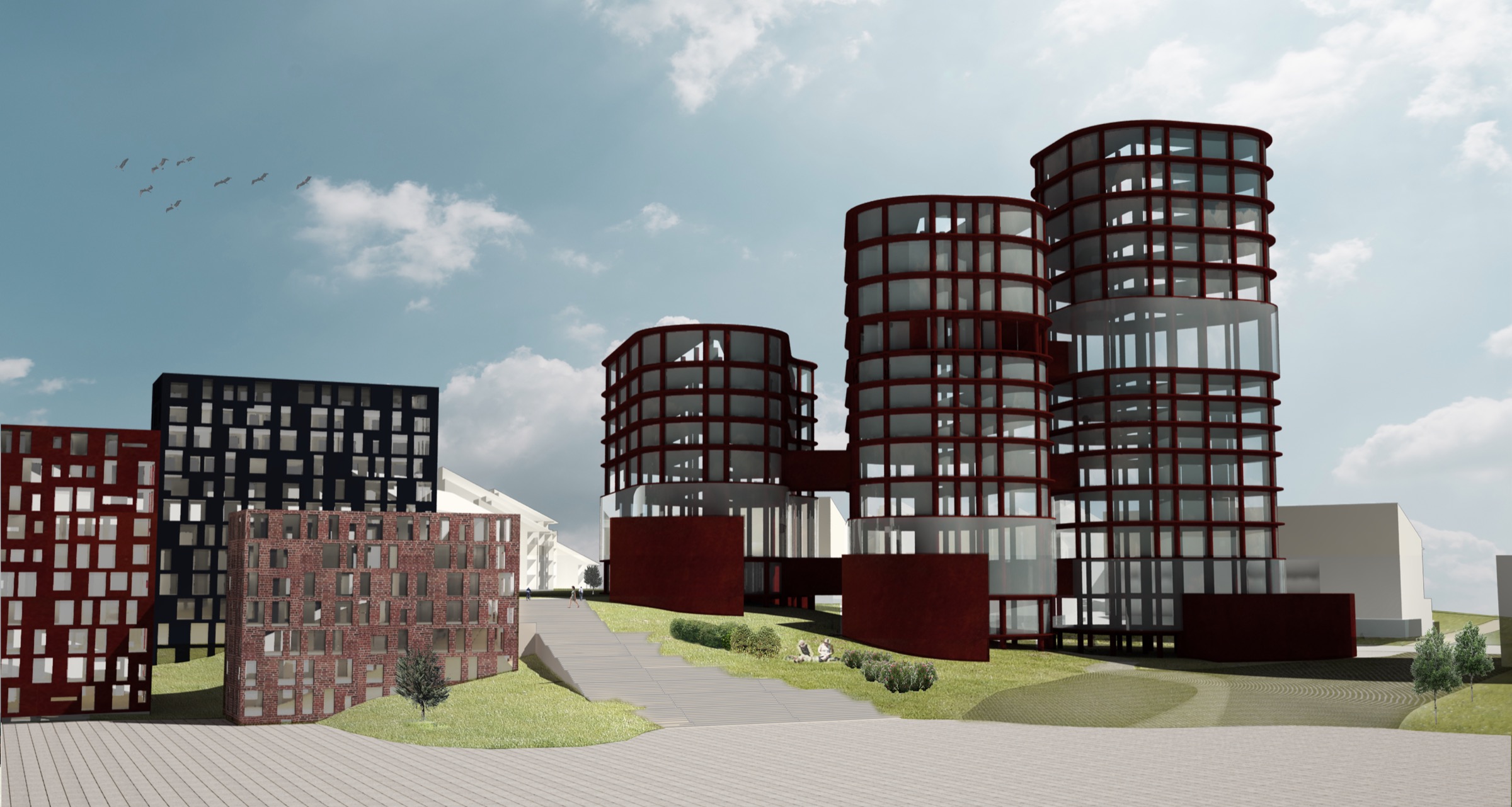
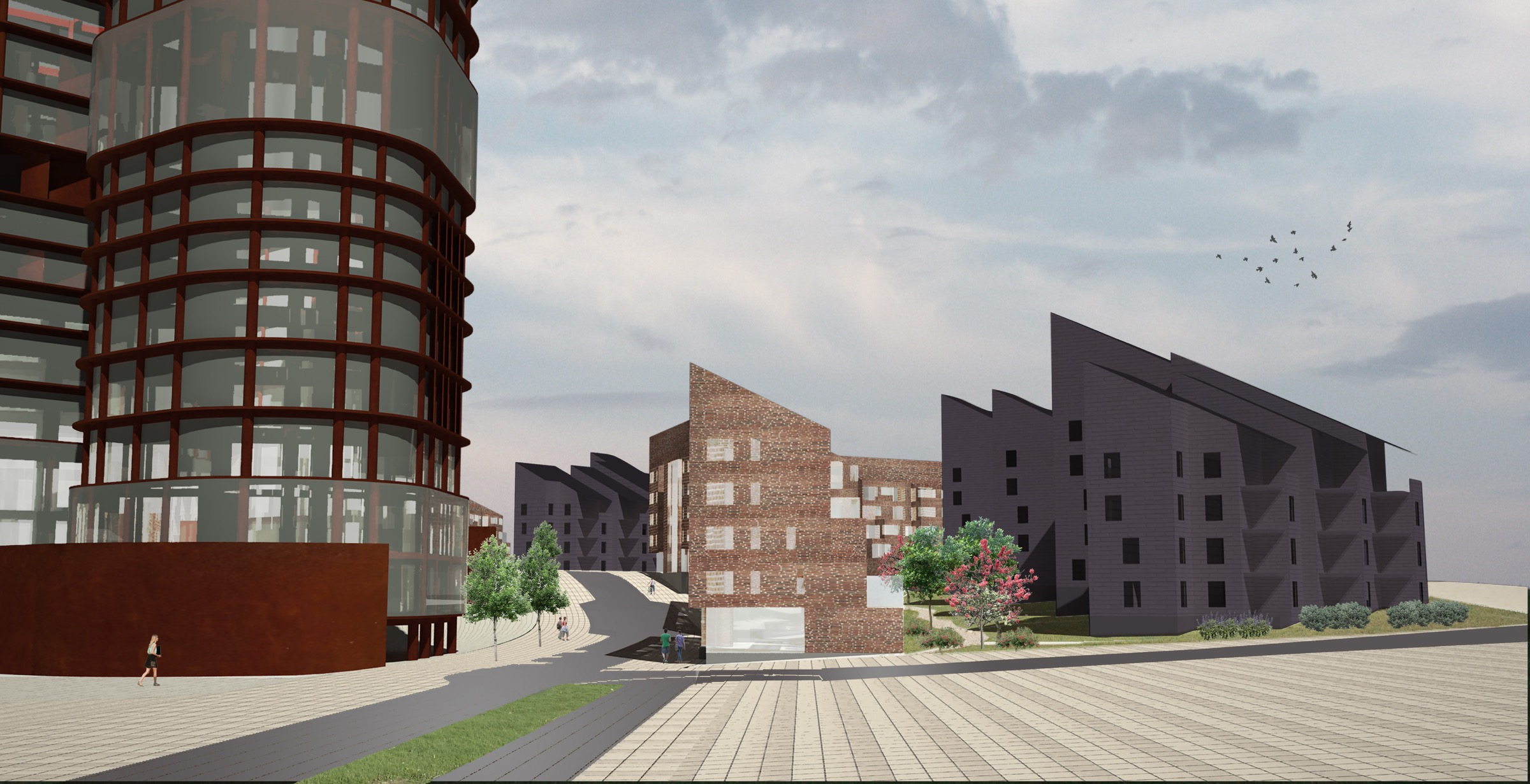
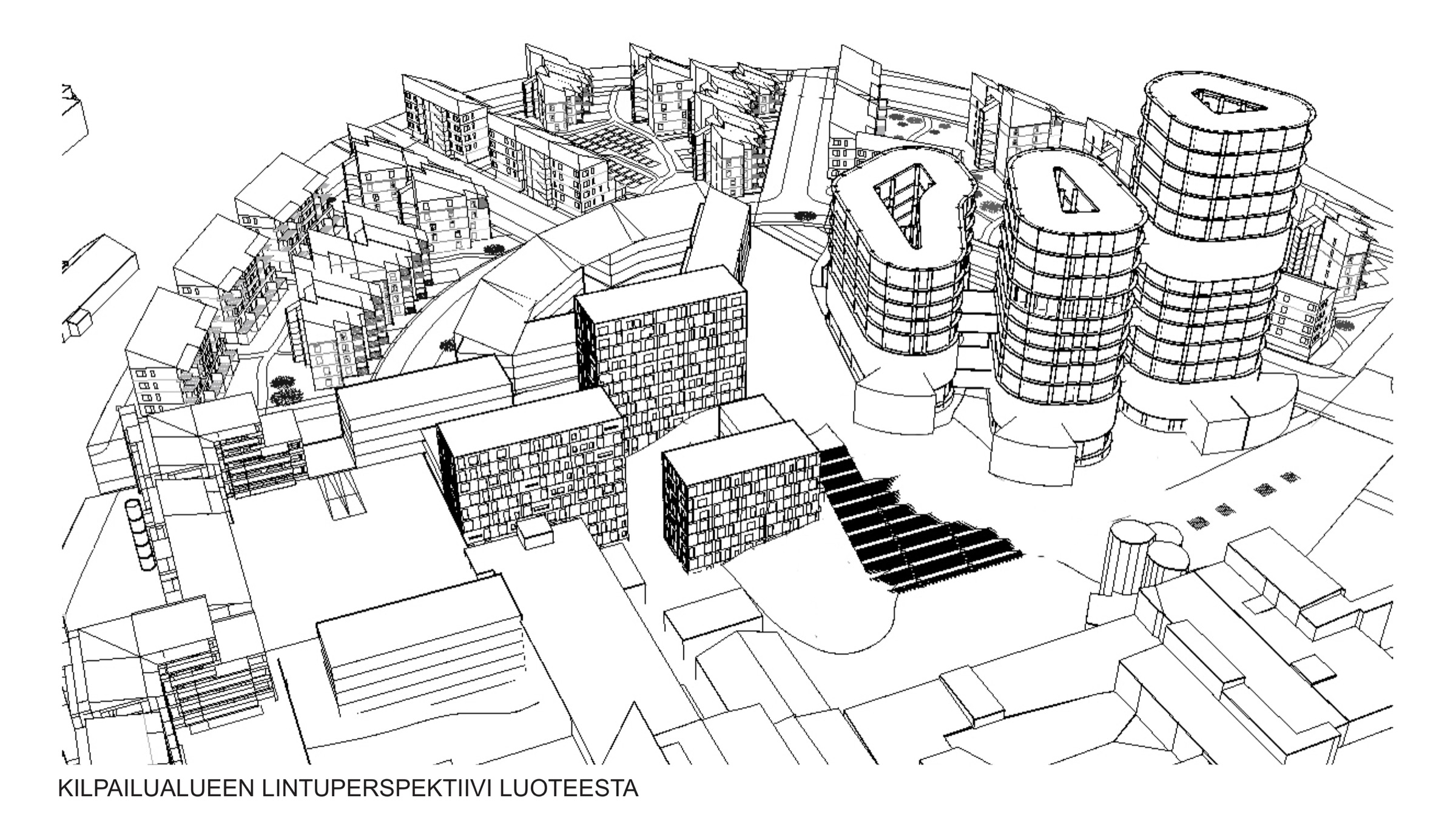
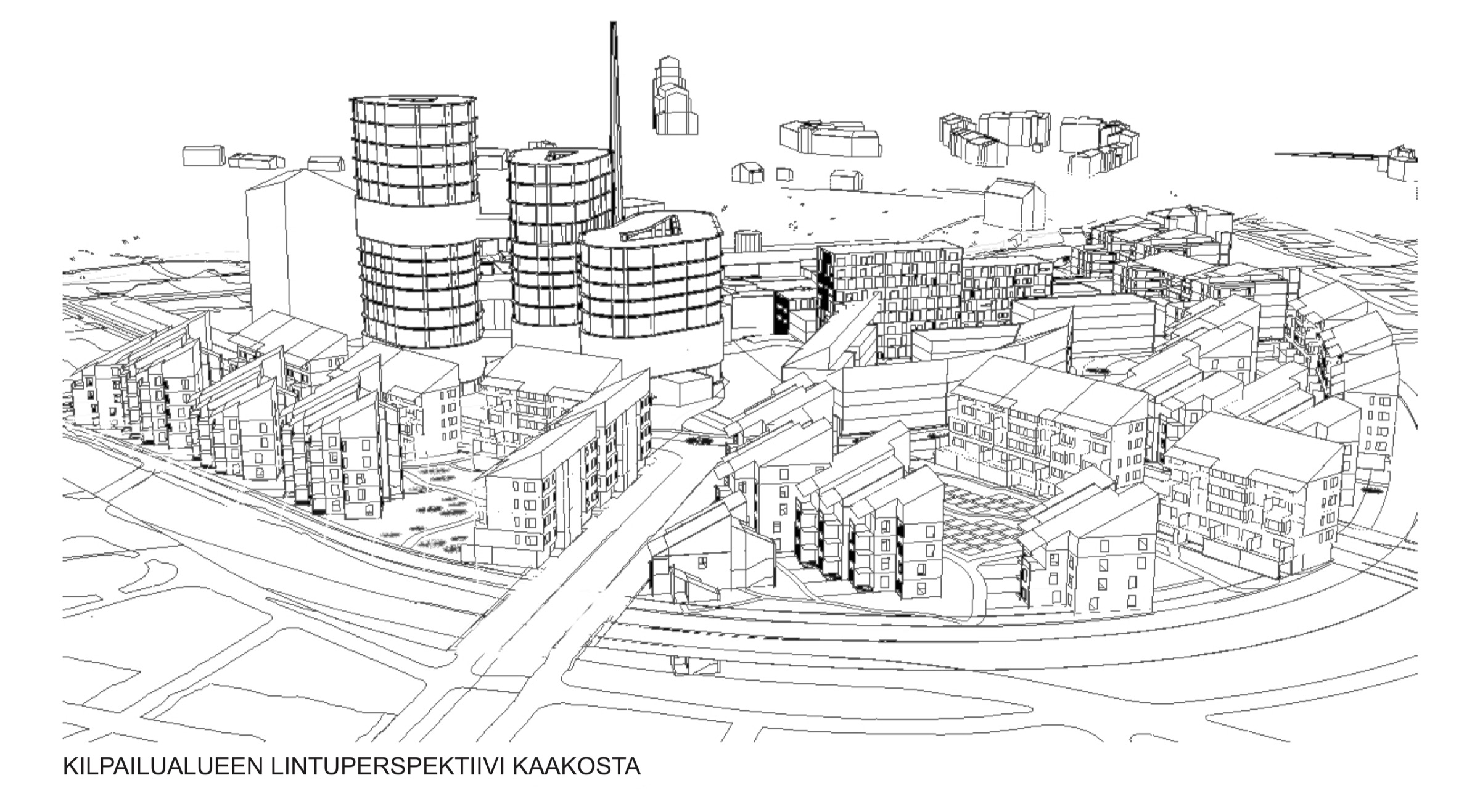
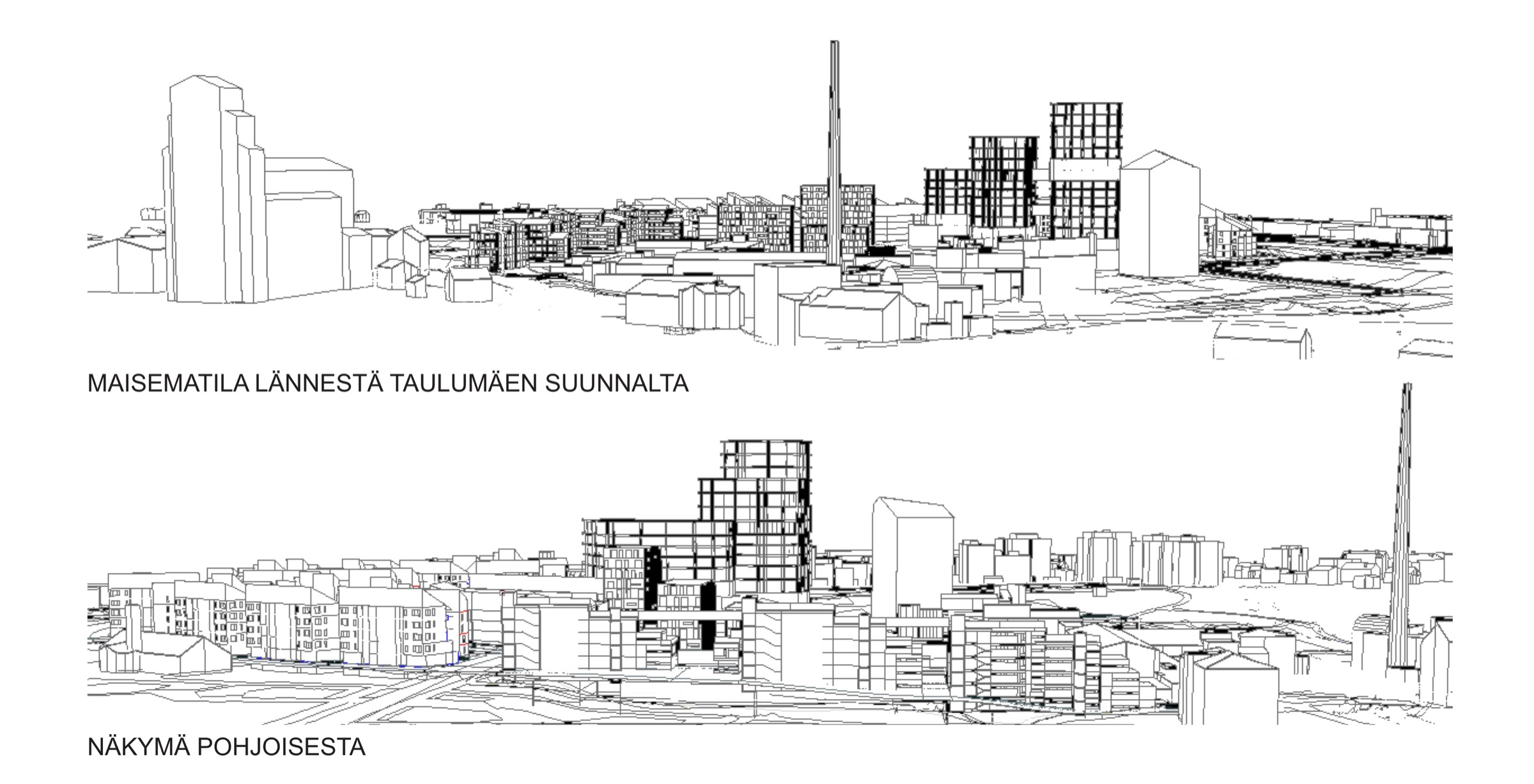
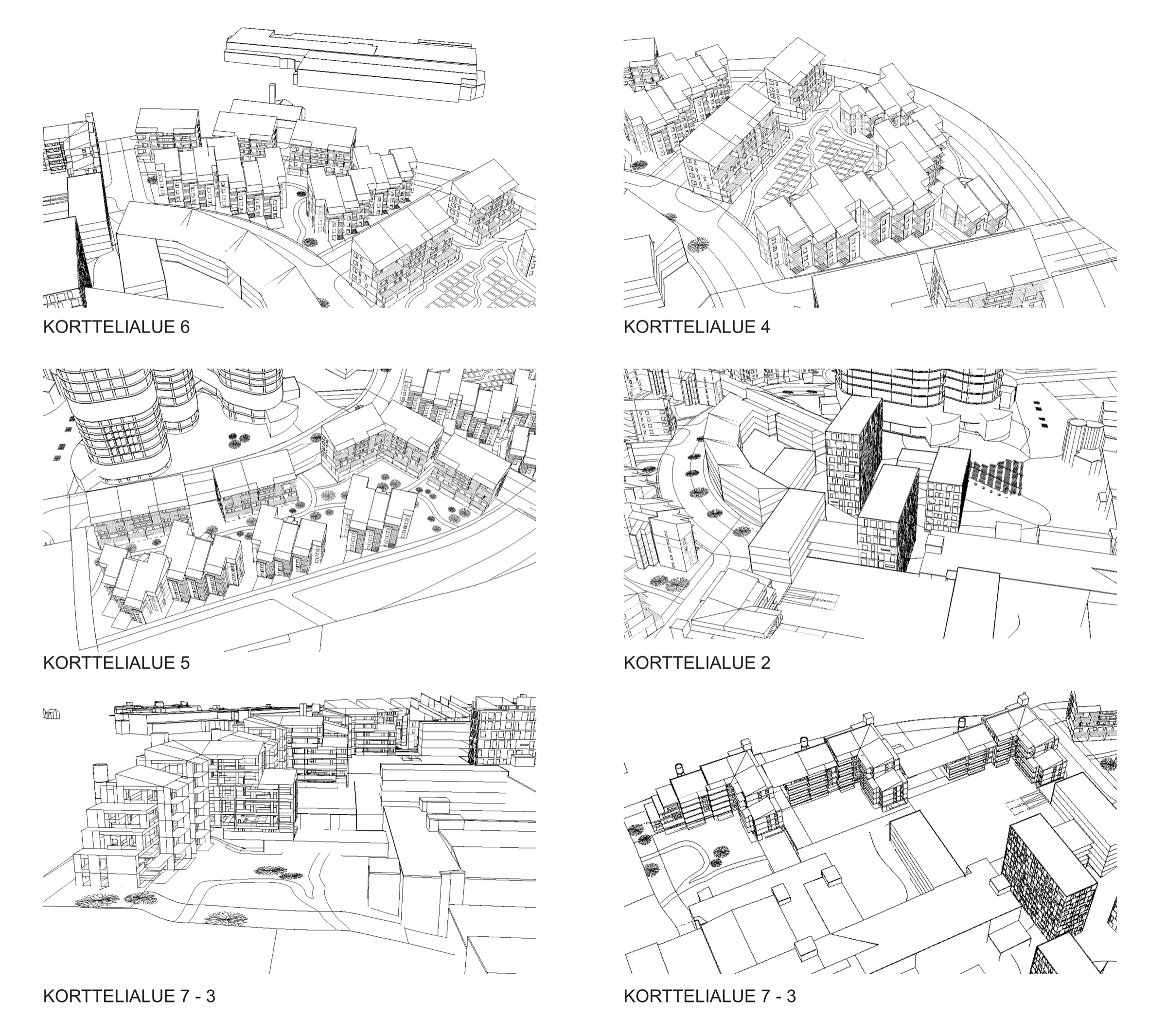
Around the old red- brick paper factory a versatile and sensible city district will be built, the implementation of which has, in fact, already begun. The competition area is located at the very core of Kangas, and will form the centre of the entire area. The objective of the competition was to find a high-quality proposal as the basis for the town planning and implementation, which would enable the construction of a pleasant area of workplaces, housing and education. The competitors had to take into consideration the cultural-historical industrial environment of regional significance and design a centre with an aesthetically high-quality cityscape.